What exactly is an automated warehouse?
Did you know that an automated warehouse can handle tens of thousands of pallet locations, while requiring virtually no employee involvement? Automating warehouse processes is a natural stage of growth for companies — especially those that have reached a certain threshold and want to stay ahead of the competition.
But what exactly is an automated warehouse, and when is implementing one a bullseye decision? We explain everything in this article, which will help you determine whether warehouse automation will work in your space.
Automated warehouse – definition: what exactly is it?
An automated warehouse is a logistics system in which the transport, storage, picking, and identification of goods are carried out with the support of, or entirely without, manual labour.
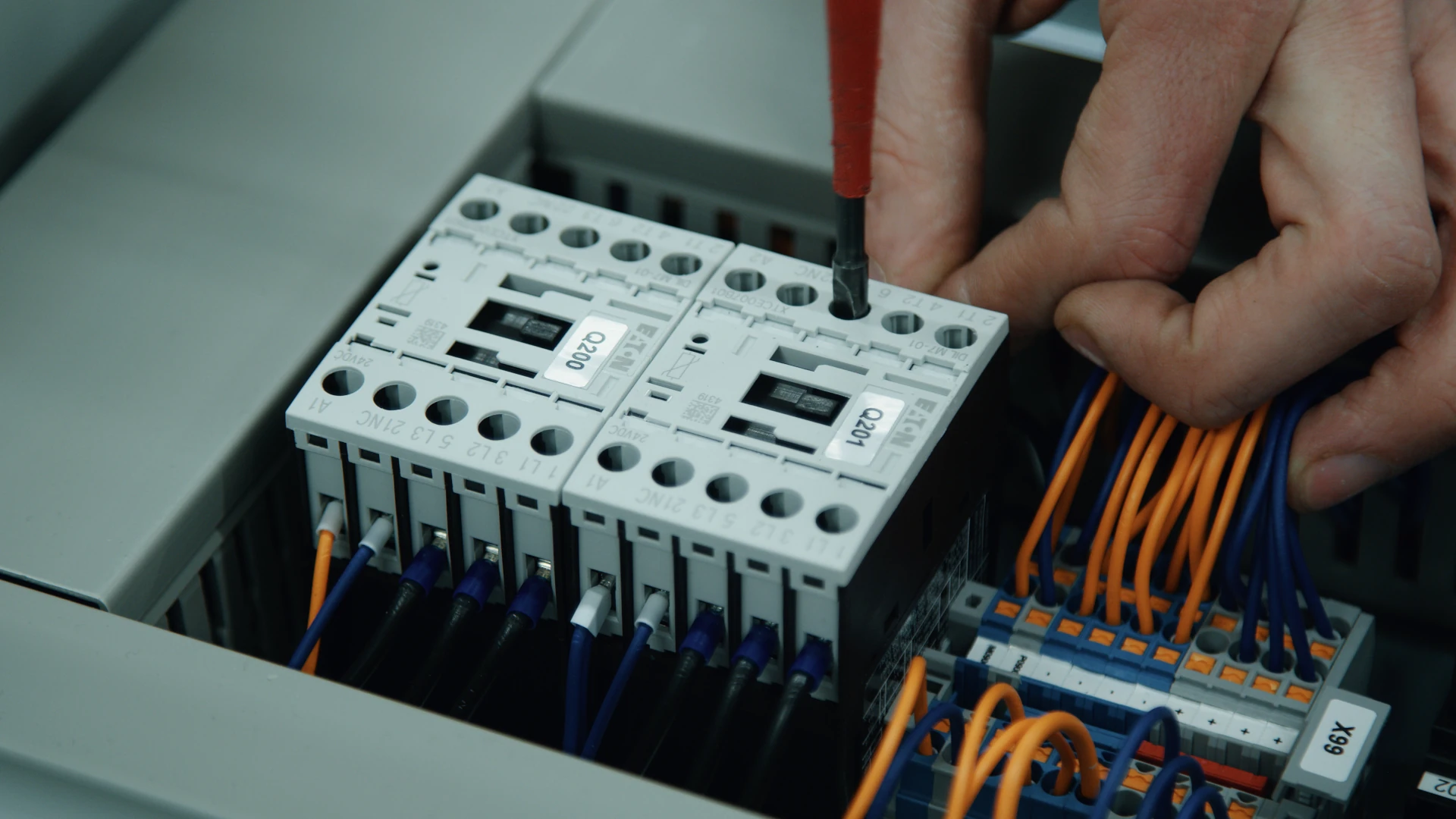
The essence, however, is not merely the presence of automation devices, but their integration within a single, overarching management system. Only by combining the physical layer (machines, robots, conveyors) with the digital layer (WMS software, PLC controllers, supervisory systems) are the intended results achieved.
Automated warehouse – what does it consist of?
In practice, many elements, which we describe below.
Internal transport systems
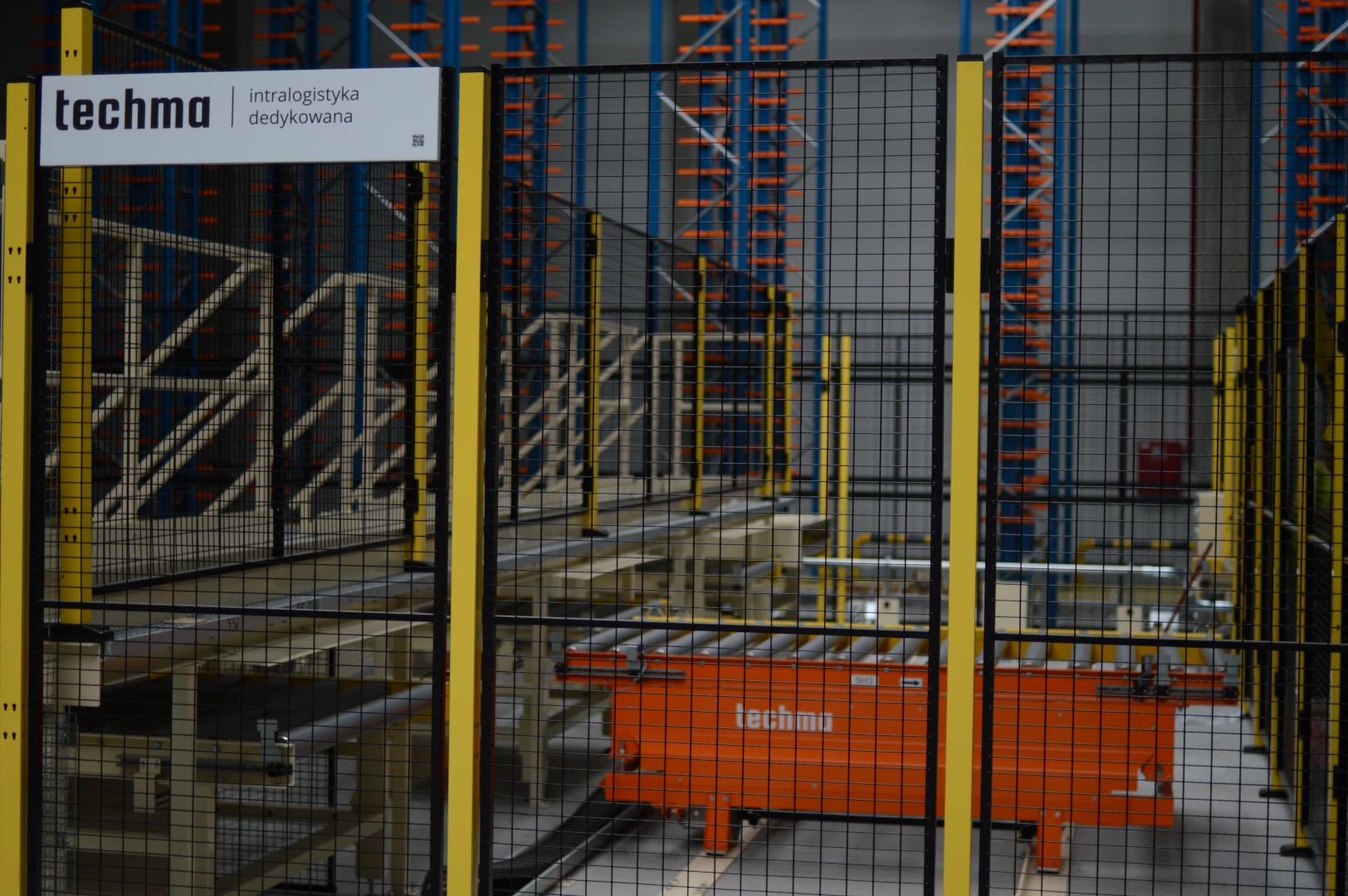
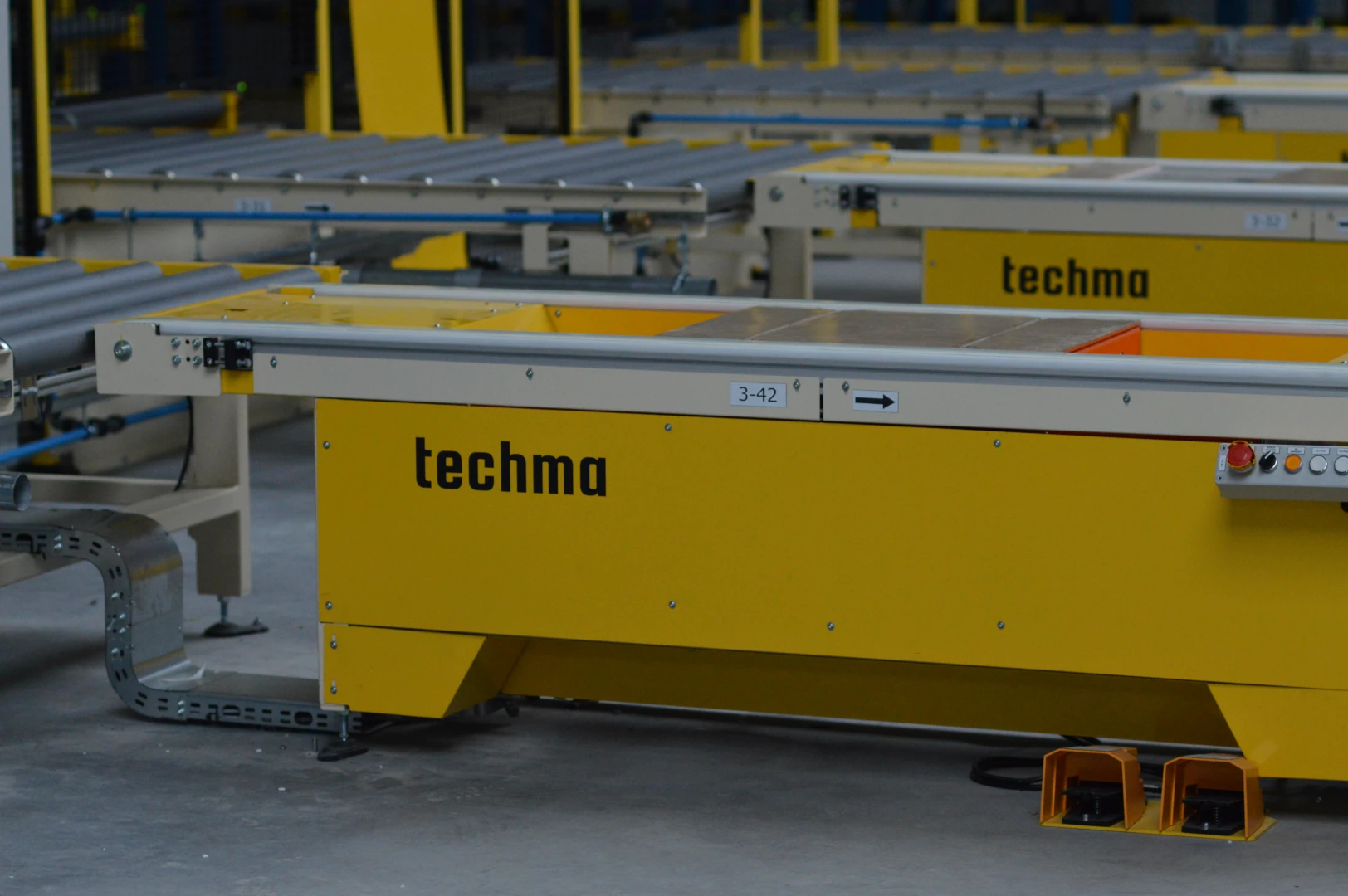
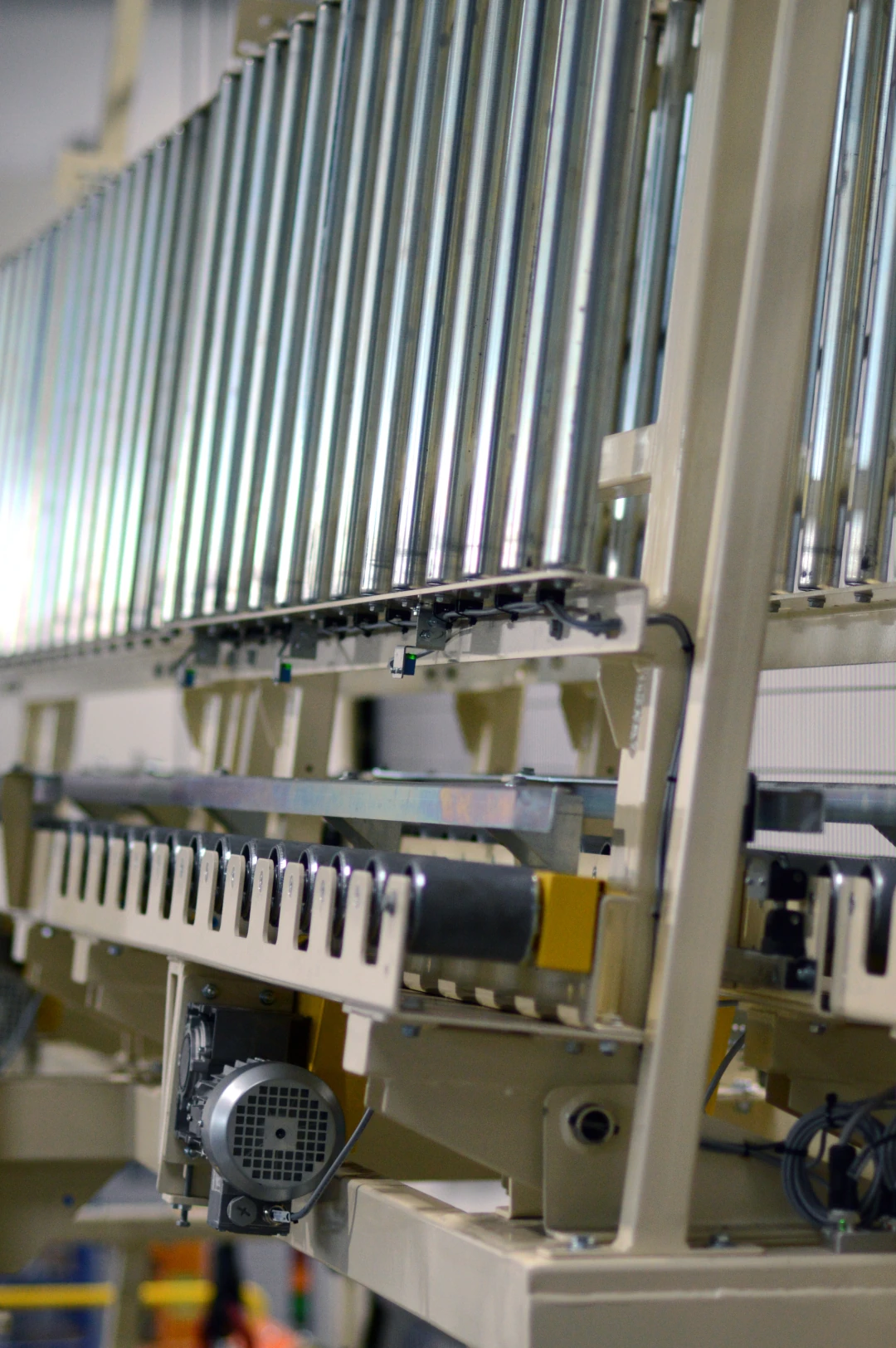
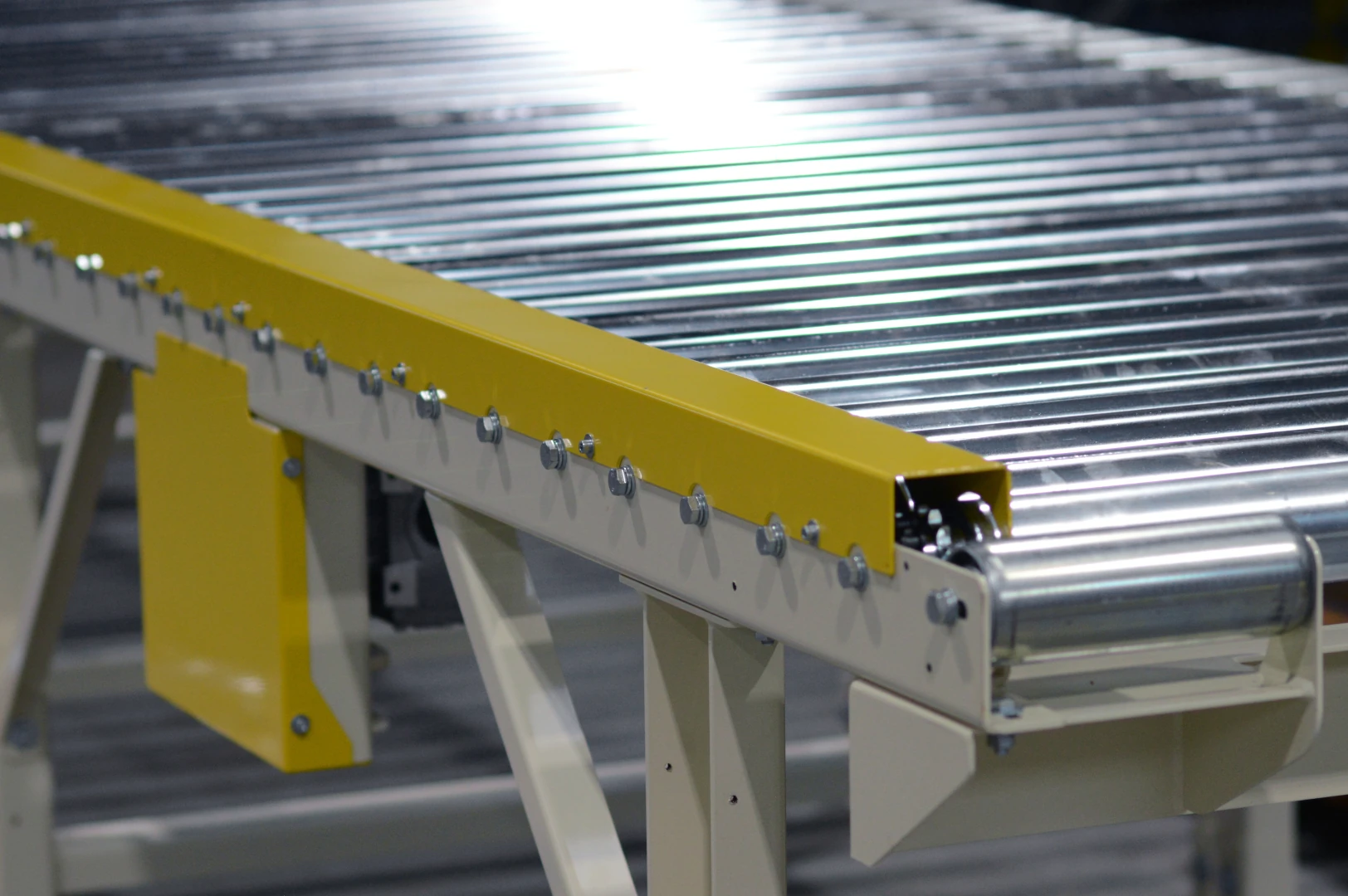
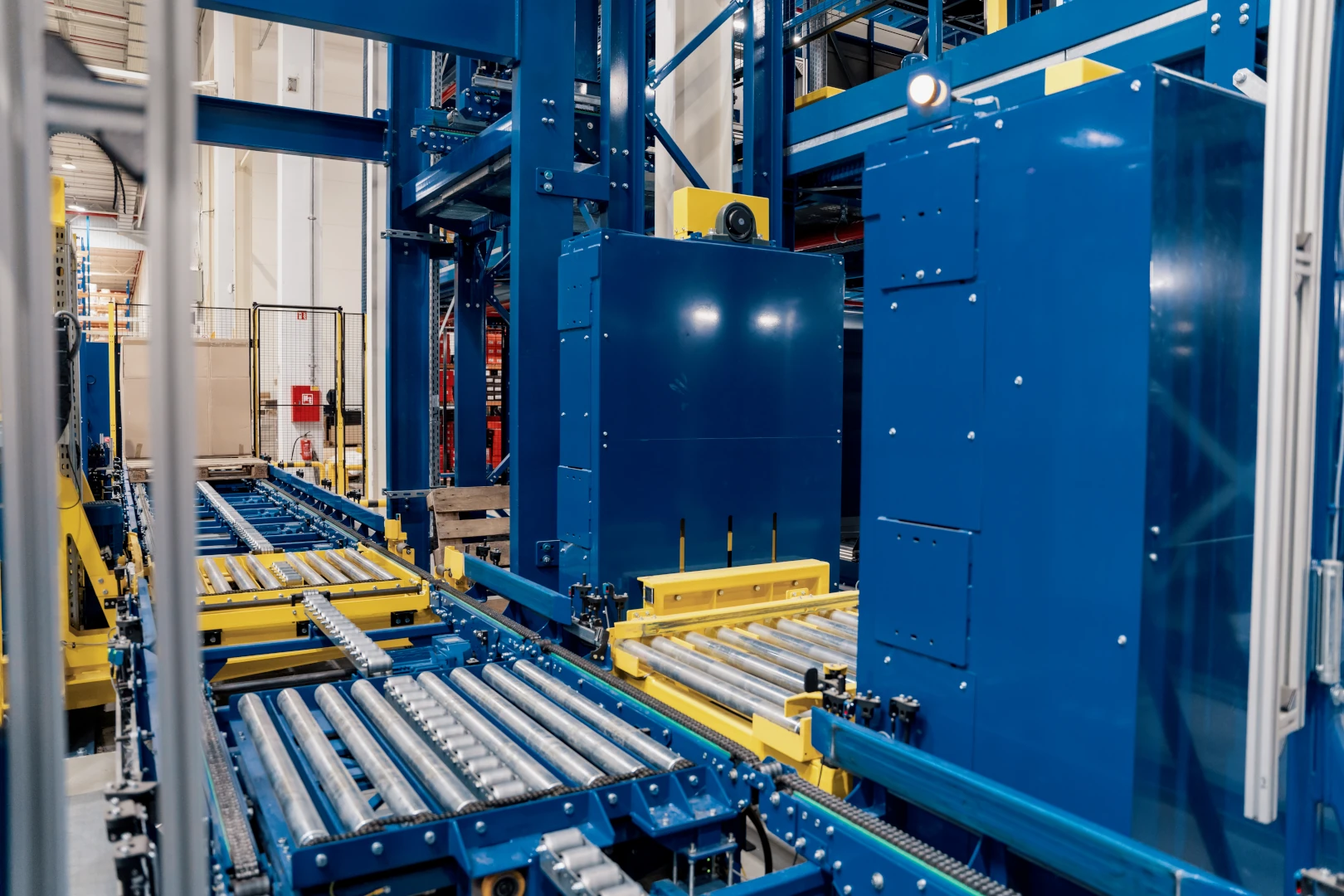
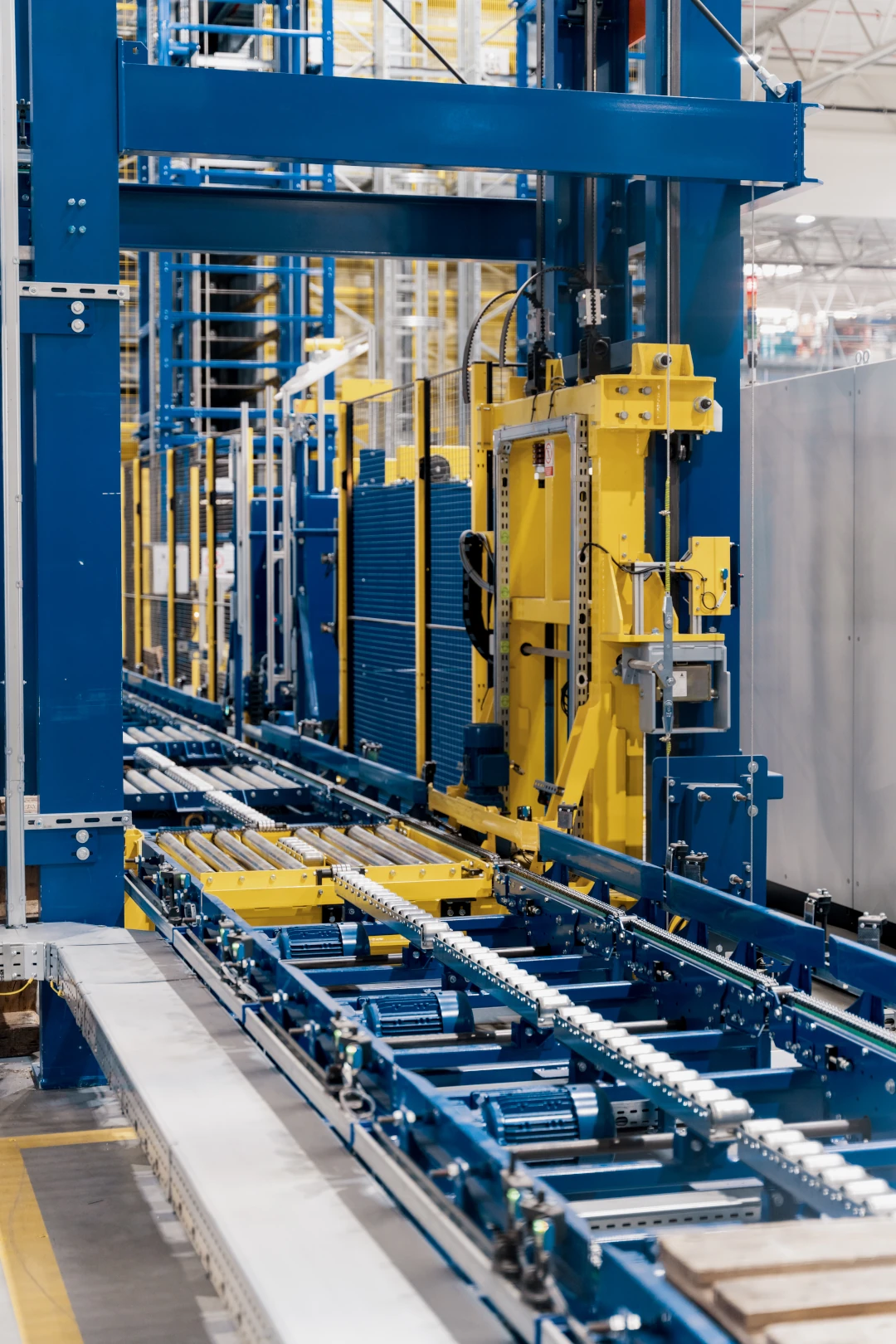
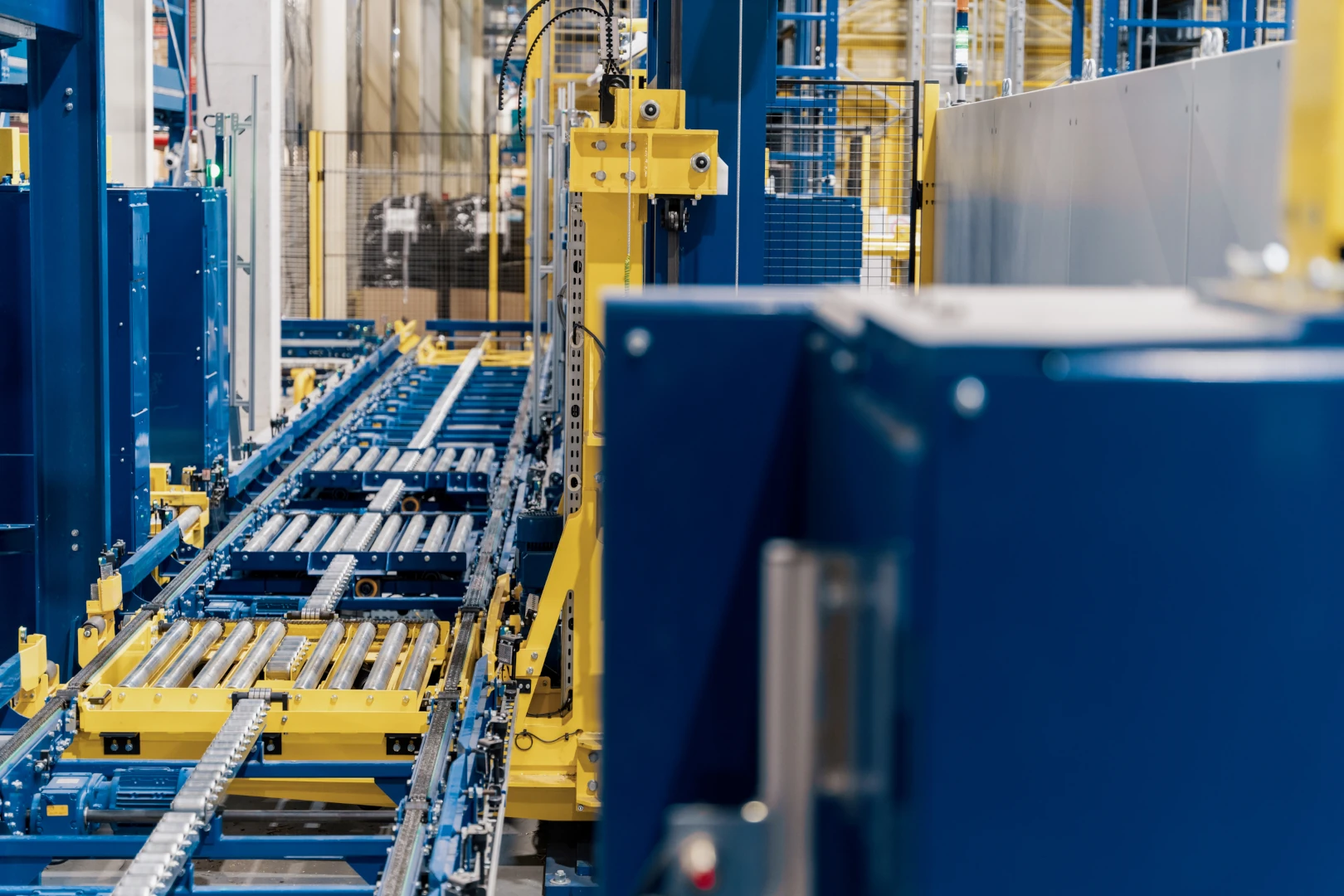
One of the foundations of an automated warehouse are chain conveyors and belt conveyors. They ensure a continuous flow of load units, eliminating downtime and the need for workers to manually handle goods.
High-bay storage systems
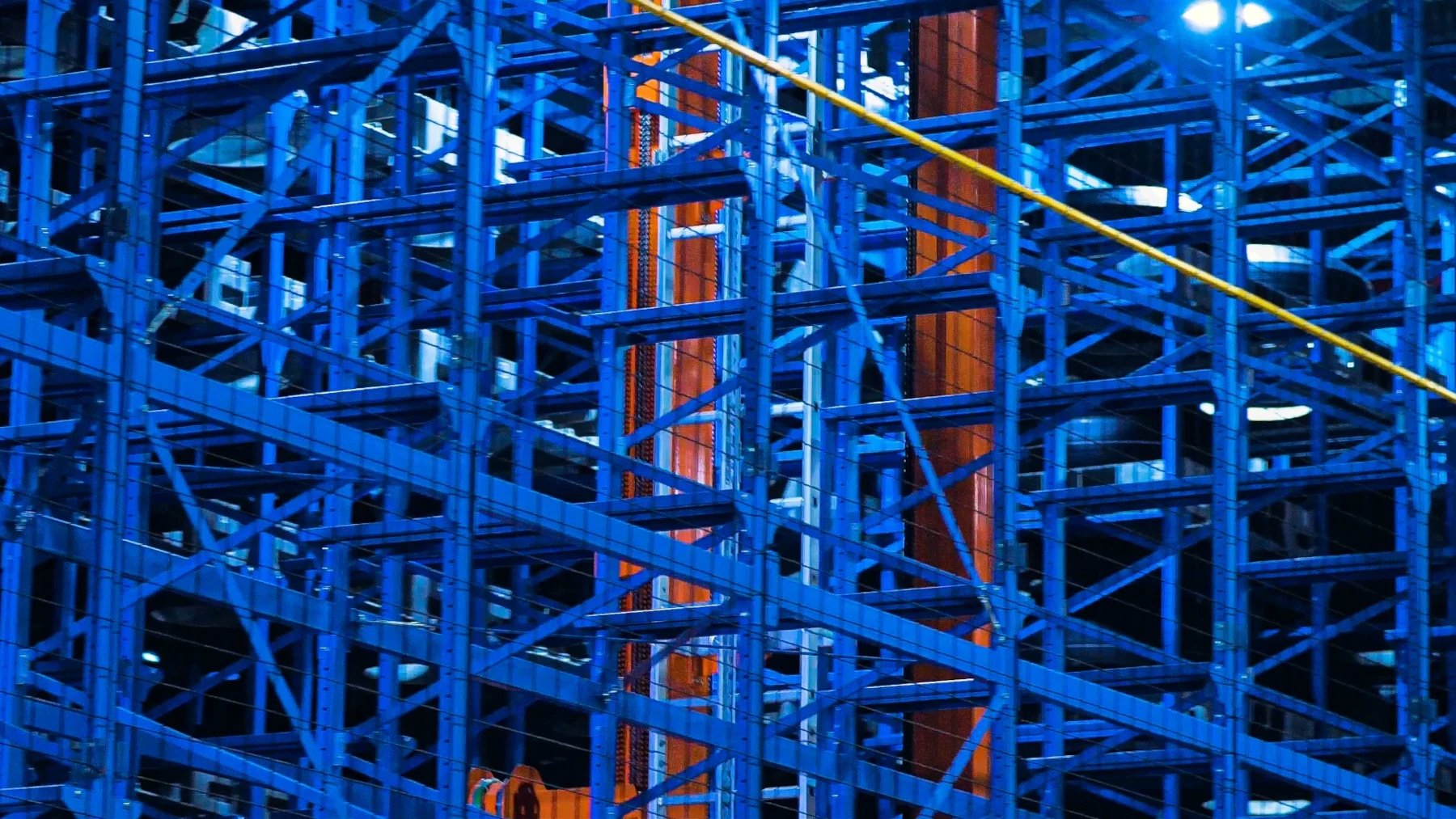
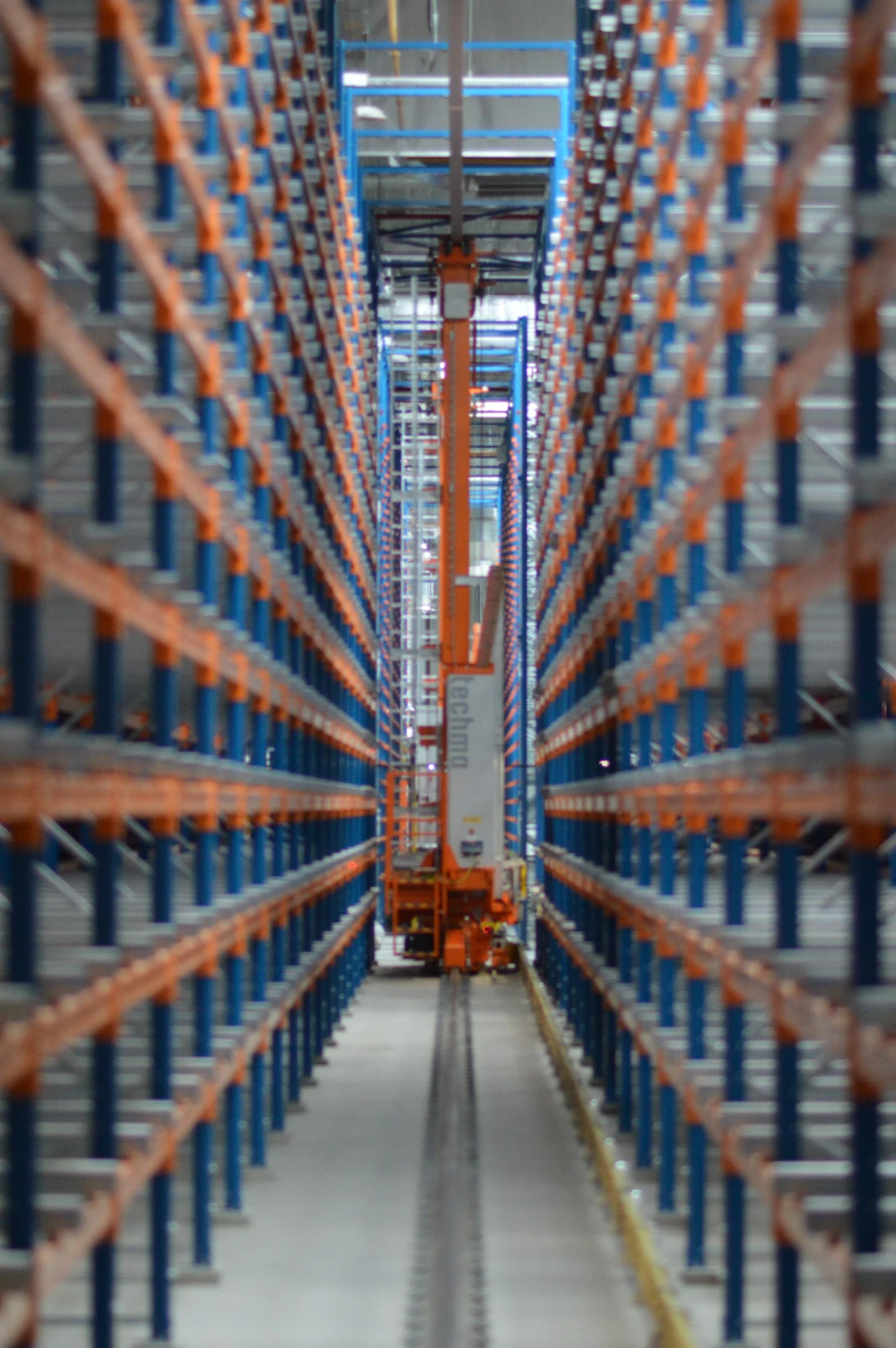
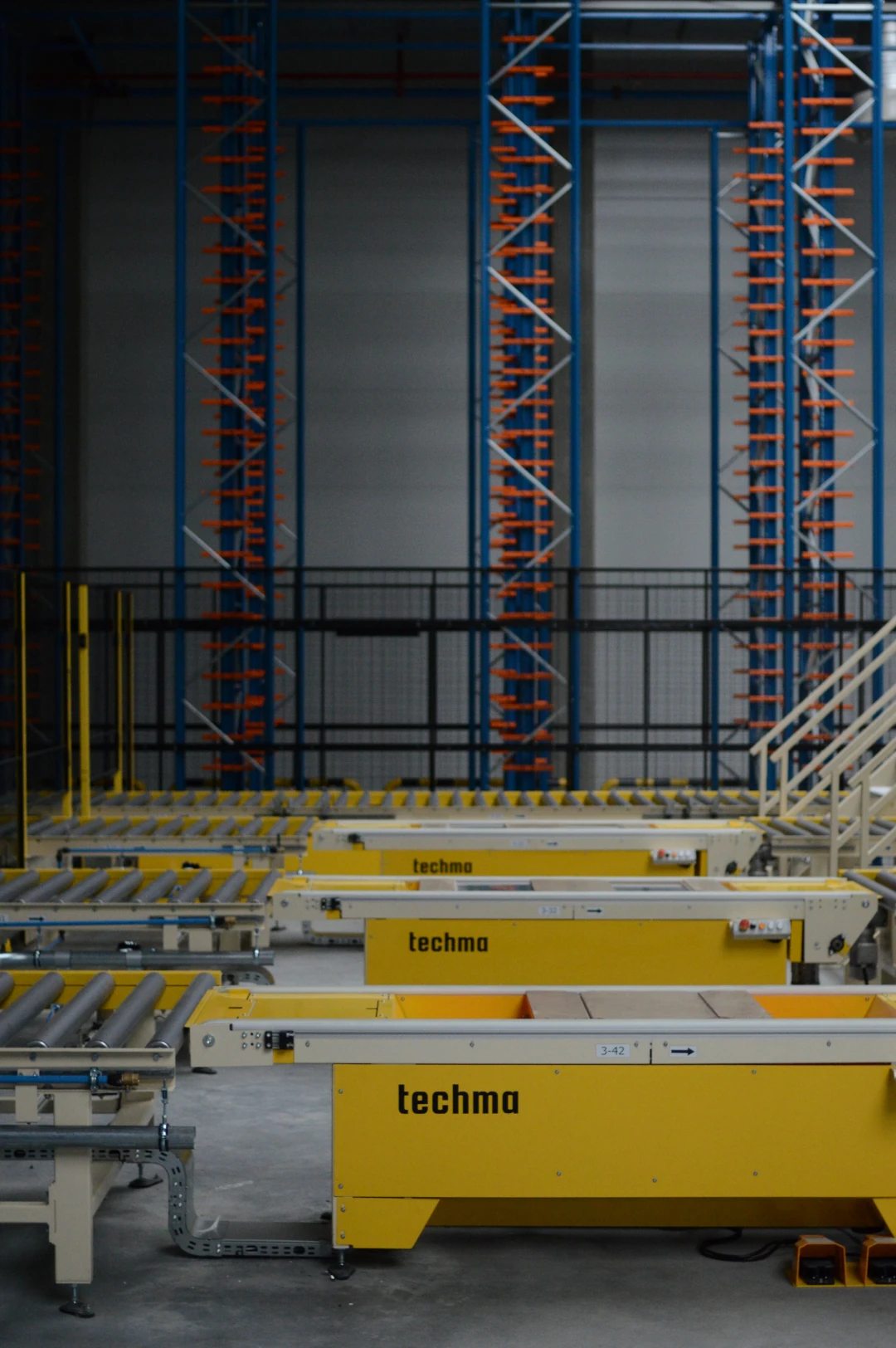
Today, tall warehouses pose no challenge, as there are many excellent technological solutions available for them. Automated high-bay warehouses use, for example, stacker cranes to service high-rise racking systems. This makes it possible to increase storage density while also tracking the precise location of goods.
Industrial robotics
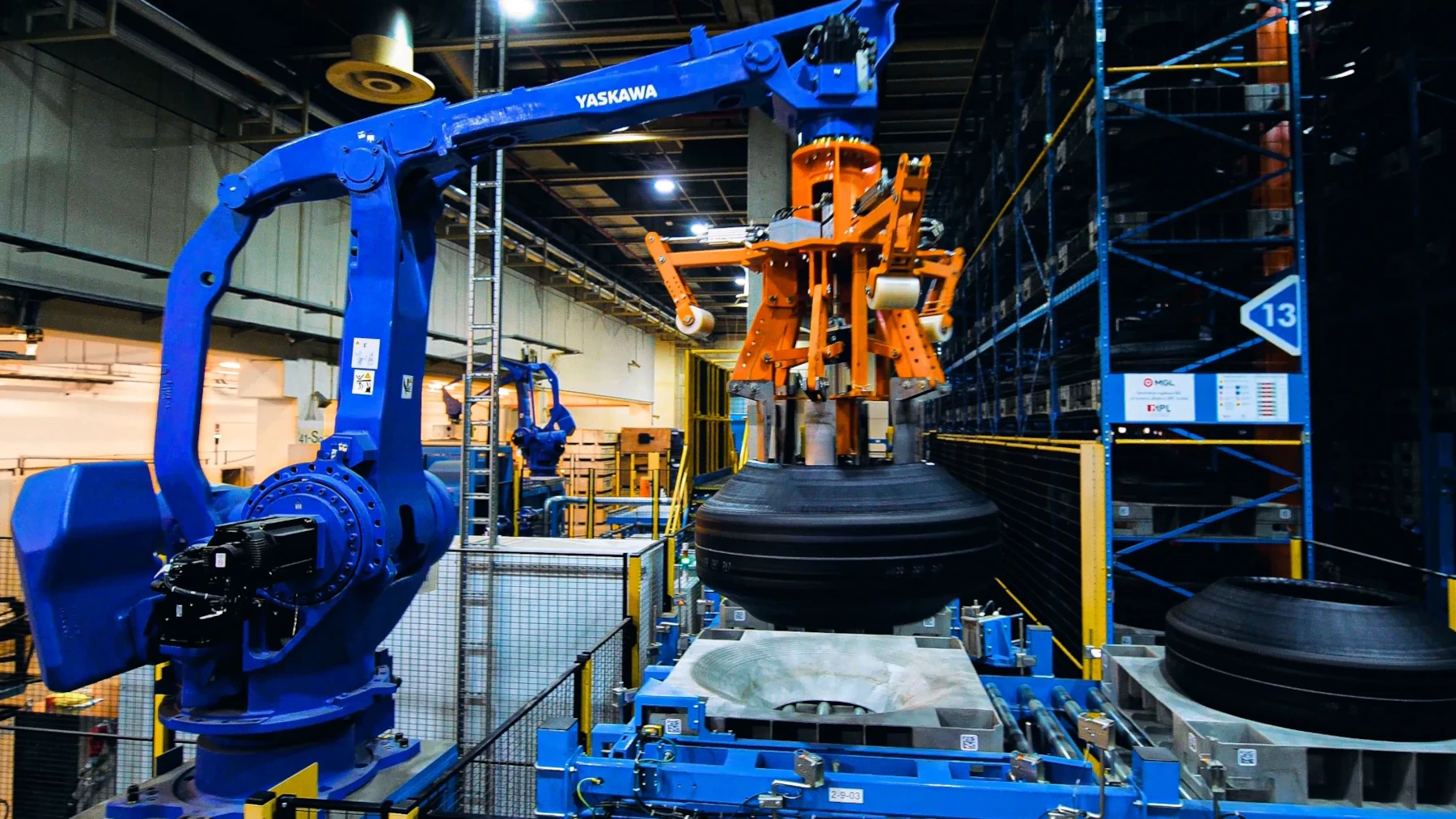
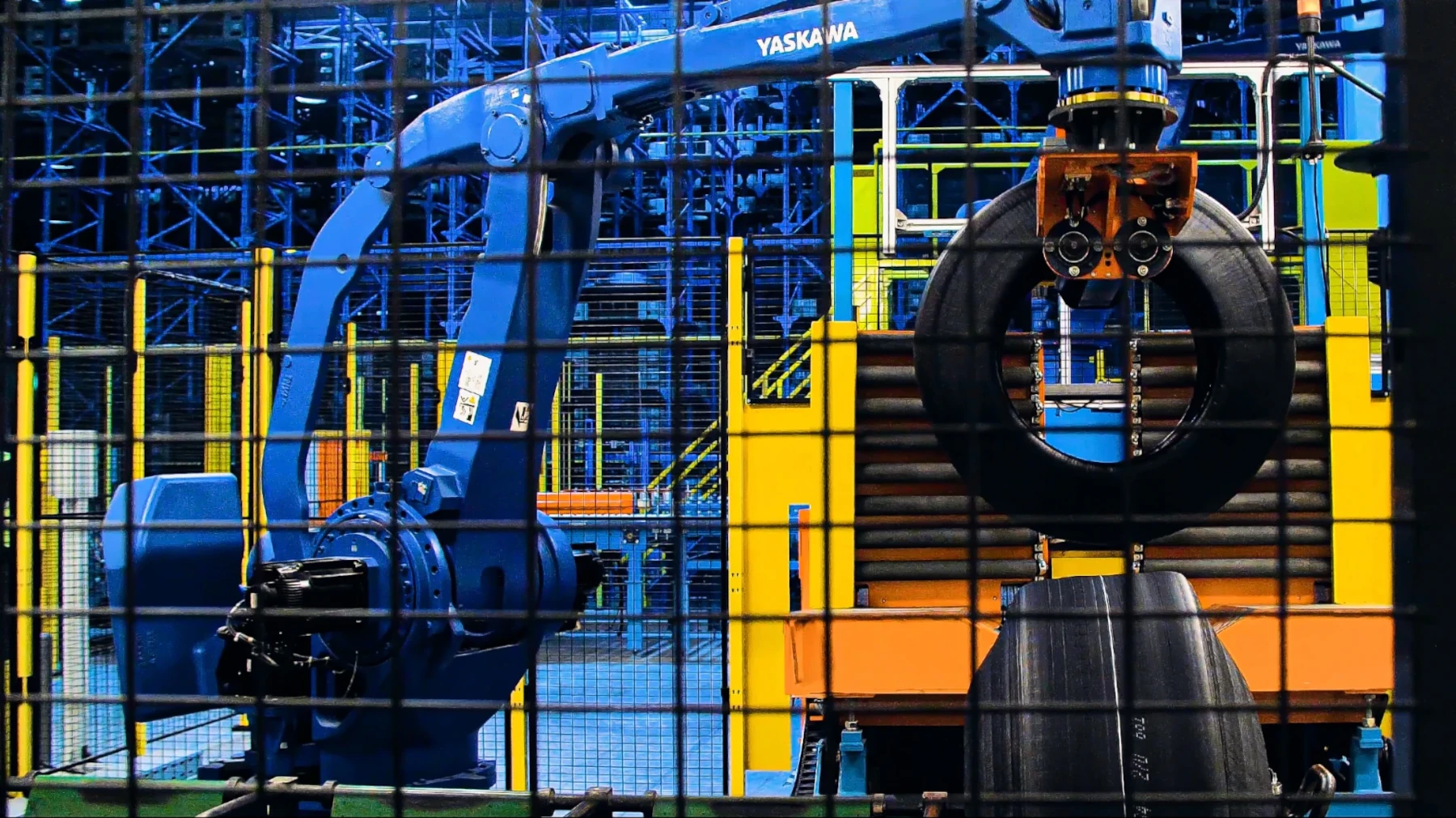
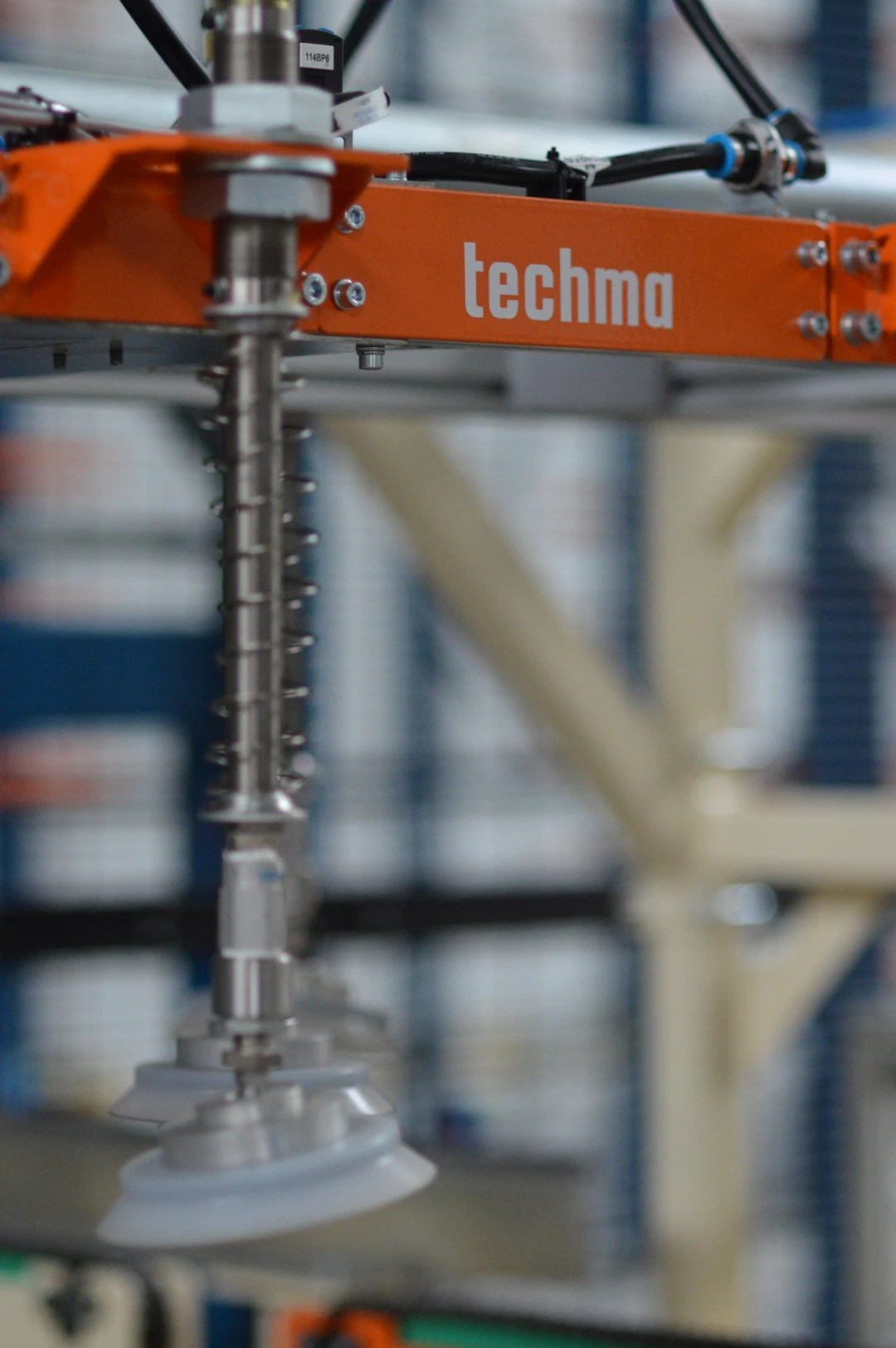
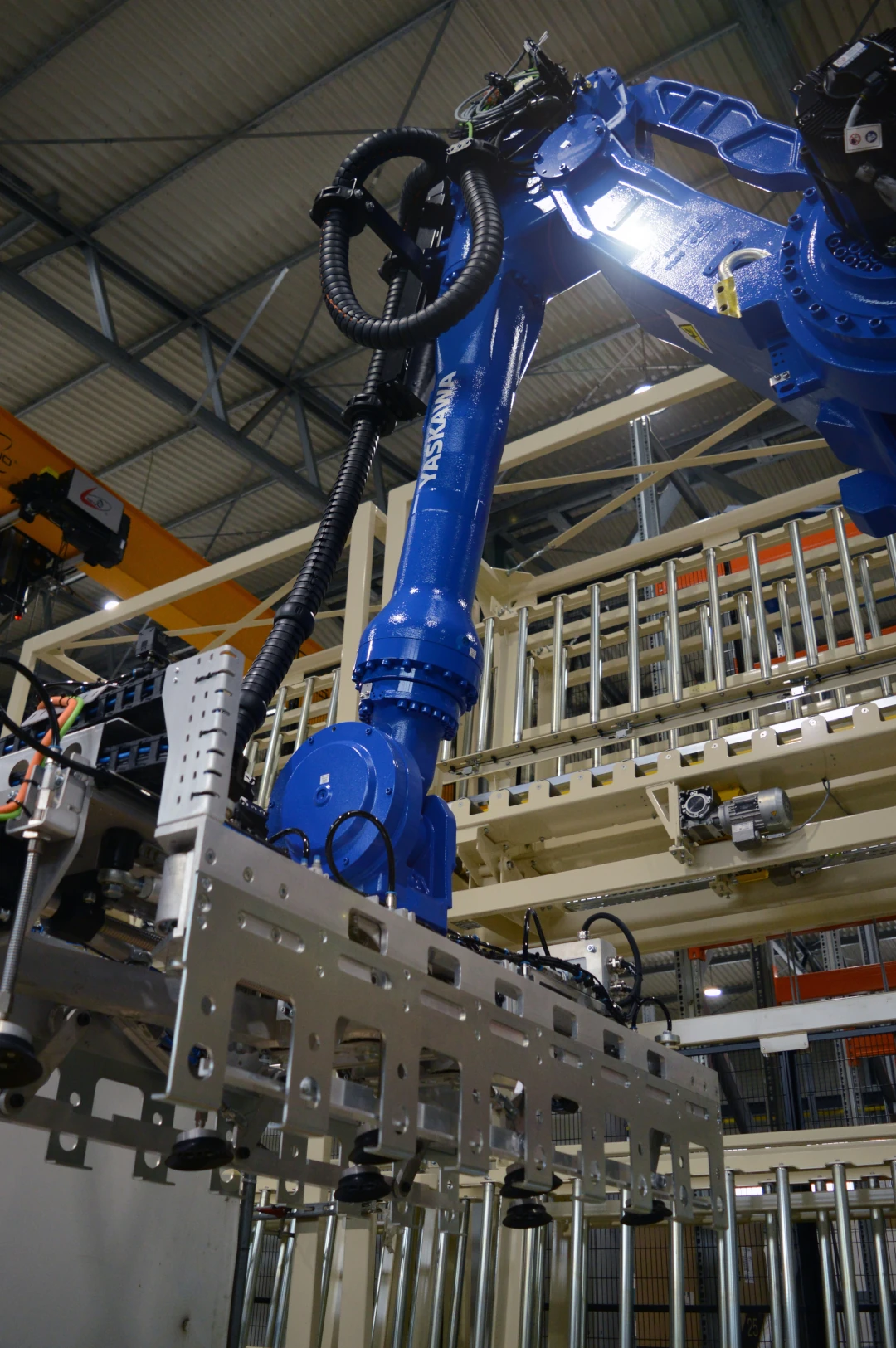
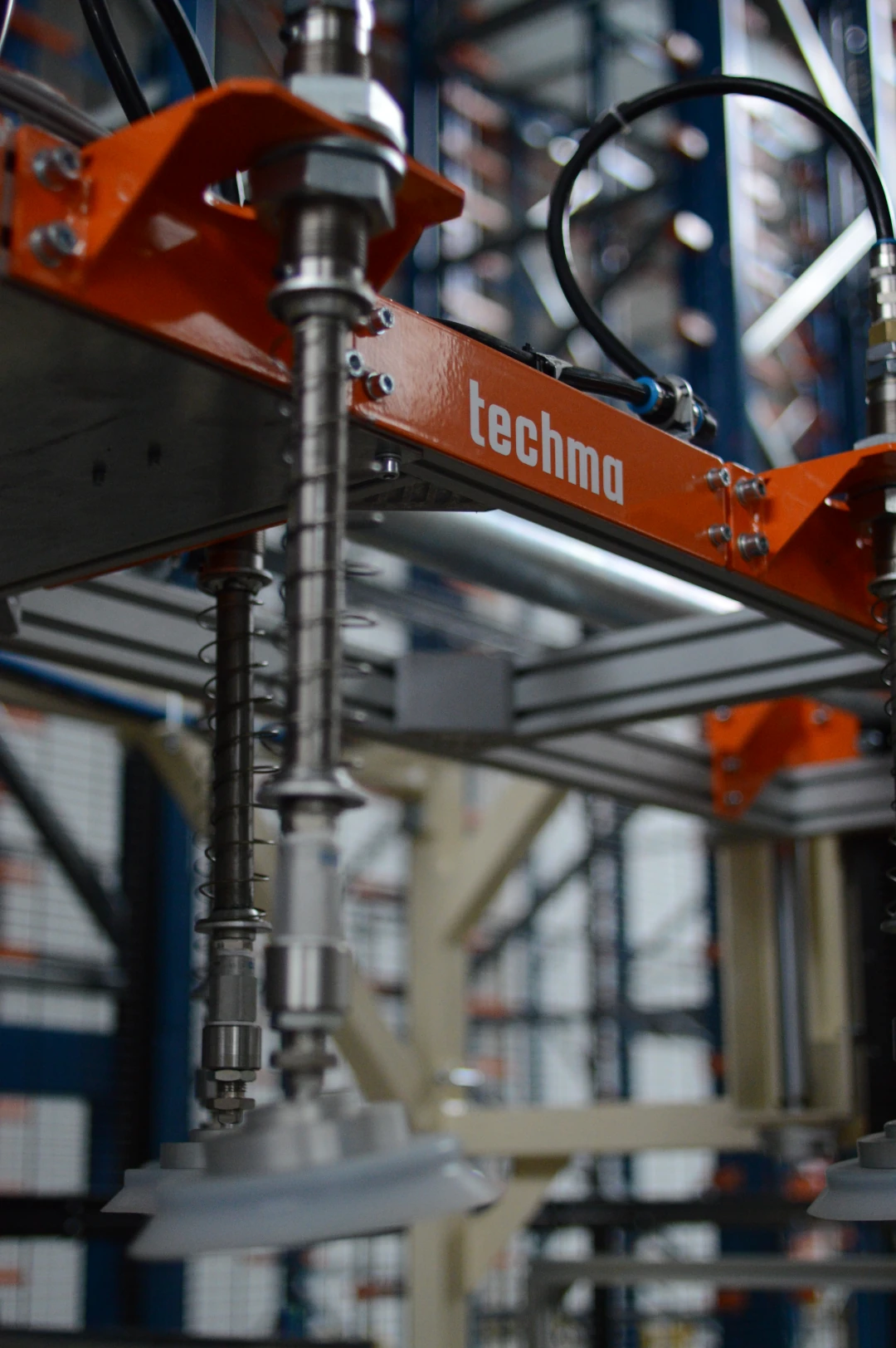
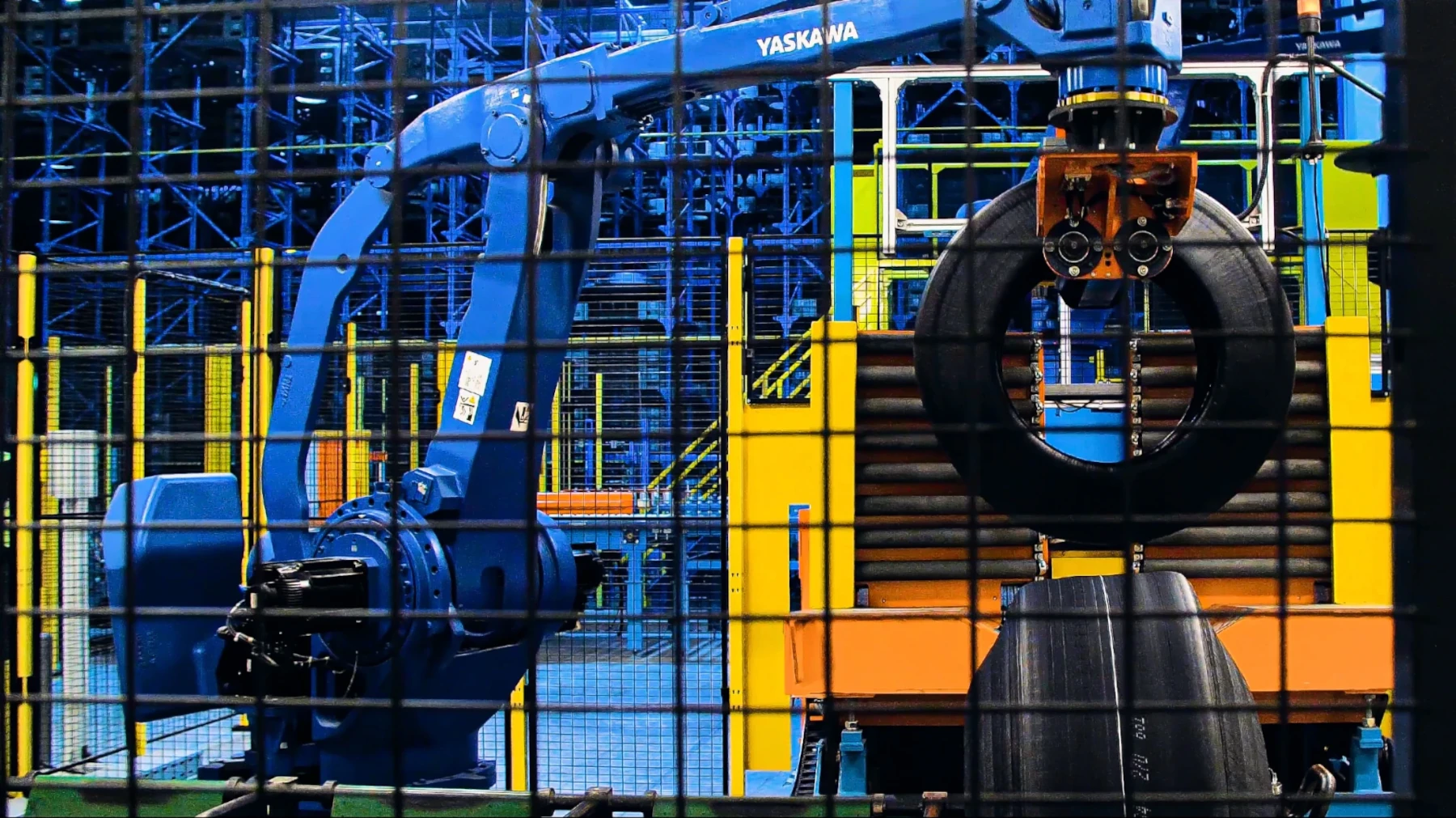
Palletising and depalletising robots are playing an increasingly important supporting role — they are particularly effective in high-intensity work areas. They relieve workers of time-consuming and repetitive duties.
Autonomous transport systems (AGV/AMR)
Autonomous vehicles carry out transport between warehouse zones without an operator. Depending on the technology, they can follow fixed routes or plan their paths dynamically.
Read also: Logistics costs in a company – how to reduce them?
Warehouse management systems (WMS)
WMS software serves as the supervisory layer, meaning it manages locations, orders, and inventory levels.
Automated high-bay warehouses and beyond – what makes them so remarkable?
Did you know that it is the automated warehouse that reduces the risk of costly errors? It replaces people in tedious tasks, freeing them to focus on more demanding responsibilities.
Admittedly, the initial investment is not low. However, automation reduces costs associated with manual labour and errors. In many cases, it also eliminates the need to expand the warehouse, which would be a significantly more expensive undertaking.
Automated high-bay warehouses in particular allow space to be utilised vertically, which is crucial where horizontal expansion is costly or simply not feasible.
Furthermore, with the help of automation it is possible to handle increasingly larger volumes of goods without the need to hire additional staff. The system can be expanded in stages, according to business needs.
Is warehouse automation straightforward?
In some respects, yes — but purchasing and integrating automation systems, building the infrastructure, and deploying the software all require financial investment. For this reason, a thorough analysis must be carried out first, and the investment planned as precisely as possible.
In which industries does warehouse automation make the most sense?
Warehouse automation is a sound choice in several industries, especially for companies that are growing rapidly.
-
E-commerce – in the broadest sense, where efficient order picking is of particular importance.
-
Manufacturing – integration of the warehouse with production lines.
-
Food & beverage – time pressure and high product turnover.
-
Pharmaceuticals – where there is no room for shortcomings.
When is warehouse automation not a good idea?
Not every organisation will benefit from automation to the same extent. This applies in particular to:
-
companies with low operation volumes,
-
businesses with highly variable product ranges and non-standard processes,
-
organisations without stable and predictable logistics flows.
In such cases, partial automation or process optimisation without investment in advanced systems may be the more justified approach.
Warehouse automation comes in many forms
Experience shows that the most effective projects are:
-
based on real data,
-
designed around specific constraints and business objectives,
-
implemented in stages, with room to grow.
This is precisely the approach we have been developing for years at MPL Techma. Our operations began in 2003 with automation components, but we quickly moved towards designing and building dedicated systems. A turning point came in 2019, when we completed our first high-bay warehouse, setting the direction for our continued development in the field of intralogistics.
Today, we focus on creating solutions tailored to specific processes — from transport systems, through stacker cranes and warehouse lifts, to material flow analytics. We invite you to get in touch — we will be happy to assess whether your warehouse is ready for automation.
FAQ – Automated warehouse
1. What is an automated warehouse and how does it work?
An automated warehouse is a modern logistics solution that uses automated systems to handle goods without the constant involvement of people.
2. What are the greatest advantages of automated warehouses?
The key advantages are above all greater efficiency and a reduction of errors in logistics processes. Additionally, automated storage systems ensure effective use of warehouse space and accelerate the flow of products through the warehouse.
3. Is an automated warehouse better than a traditional one?
Compared to a traditional warehouse, an automated warehouse reduces operational costs and increases operational efficiency. Traditional warehouses rely primarily on manual labour, which limits the scope of improvements.
4. What technologies do modern warehouses use?
Modern warehouses make use of solutions such as WMS and WCS systems, as well as AGV and AMR robots supported by artificial intelligence.
5. How does an automated warehouse contribute to cost reduction?
Automated systems allow for a significant reduction in costs related to labour, errors, and warehouse losses. Additionally, optimal use of warehouse space reduces the need to invest in new facilities.
6. Are automated warehouses safe for goods?
Yes, automated warehouses minimise the risk of product damage through precise control and reduced human involvement. Every load is transported in a controlled manner, which significantly lowers the risk of damage.
7. What types of automated warehouses are there?
There are various types of automated warehouses, including semi-automated warehouses, pallet shuttle systems, and fully automated high-bay warehouses. Each of these solutions can be tailored to specific production processes.
8. Will automation work for every company?
This is a solution for companies that want to mechanise and streamline their logistics processes and increase operational efficiency. It works particularly well where there is high demand and a need for rapid inventory management.
9. How does an automated warehouse affect space utilisation?
Automated systems enable maximum use of warehouse space, particularly through the application of high-bay racking. This allows for optimal use of the floor area and an increase in the number of storage locations without expanding the building.
10. Is investing in automation worthwhile?
Implementing automated solutions leads to a faster return on investment through cost reduction and improved efficiency. In the long term, it is a pathway to more effective and stable warehouse operations.