Warehouse conveyors – types. Which one fits your warehouse?
Did you know that warehouse automation rarely starts with the most spectacular changes? Very often, development begins with the basics – the way goods move between zones. If the flow is not smooth, even the most advanced technologies will not deliver results. That is why it is worth paying attention to warehouse conveyors, as they are one of the foundations of modern intralogistics.
What types of warehouse conveyors are there? Which ones will work best in your facility? What should you consider when choosing them? We answer these questions in this article!
What happens when a warehouse does not grow – a few words…
Now let us present a case study that illustrates how crucial warehouse conveyors really are.
A customer contacted MPL Techma at a moment when the company’s growth began to outpace the existing warehouse organization.
The number of pallets and crates was increasing, and manual transport between receiving, picking, and shipping zones was no longer sufficient. It caused downtime, and the number of errors kept growing, leading to complaints. Customers were leaving more and more often. Bottlenecks appeared especially during loading.
It turned out that implementing a single device was not enough. A coherent system had to be designed to ensure smooth and safe goods flow throughout the entire warehouse.
We started with an analysis of the material flow and identified areas where manual transport placed the greatest burden on employees and slowed down operations. Based on this, we designed a system built on several complementary types of warehouse conveyors, each with a specific role to play.
The core of the installation consisted of chain conveyors for pallet transport, ensuring stability and reliability under heavy loads. In picking and sorting zones, roller conveyors and belt conveyors were implemented, significantly improving the flow of crates and smaller loads. Direction changes were handled by roller-chain transfers and automatic turntables. Finally, employees no longer had to manually maneuver pallets.
All these implementations improved daily operations, and the business finally got back on track – along with the return of customers.
Basic classification of warehouse conveyors
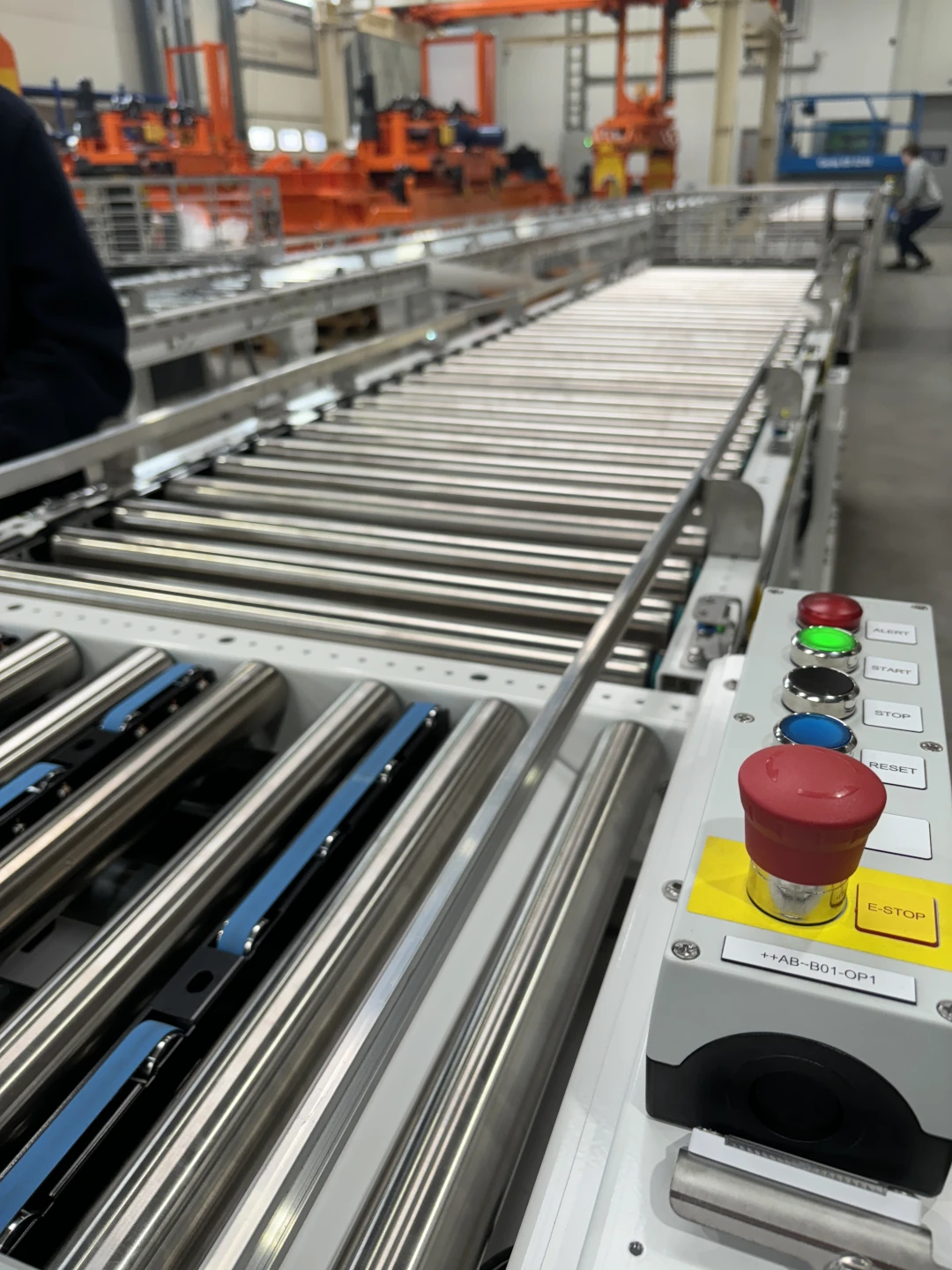
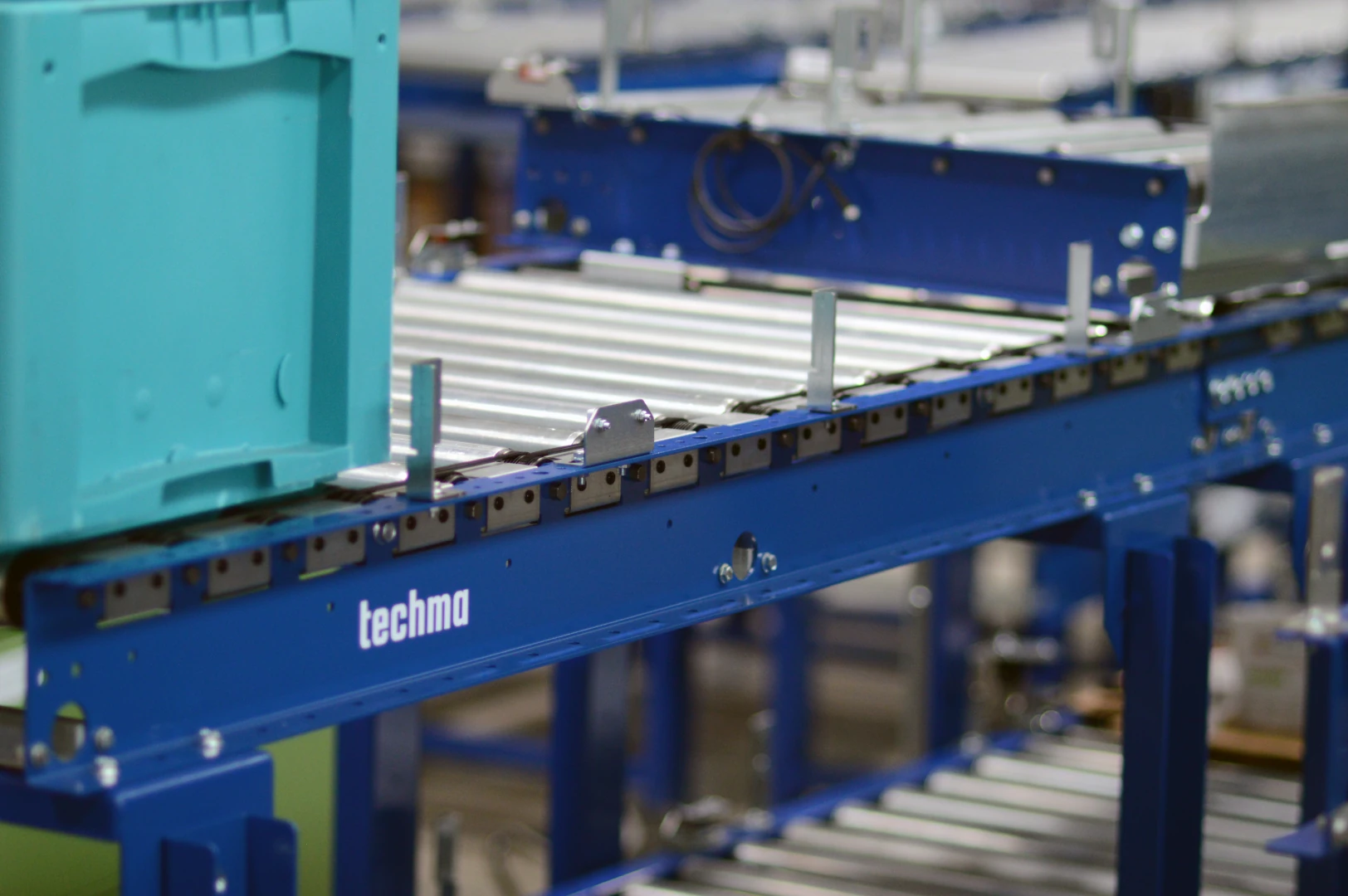
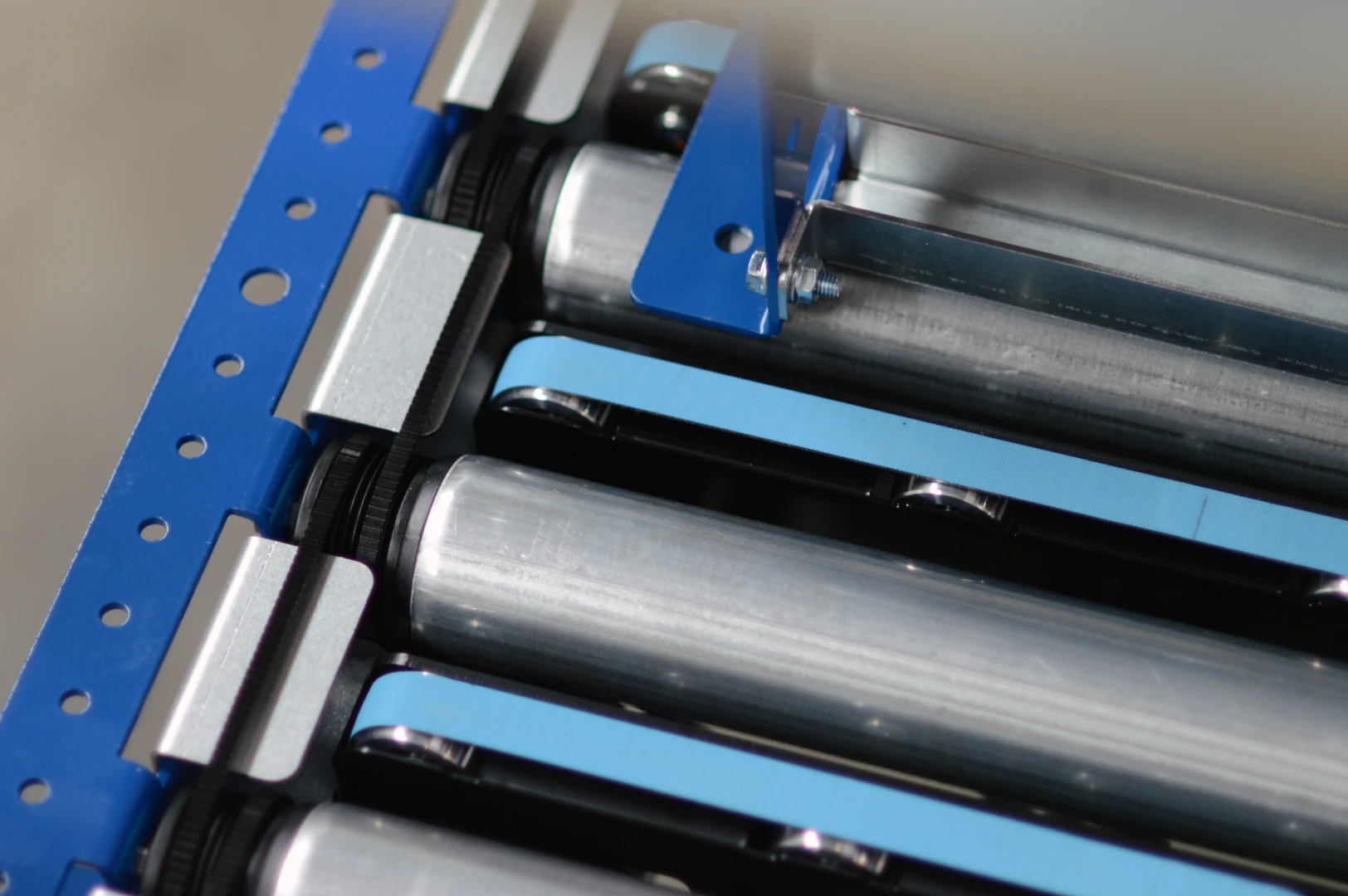
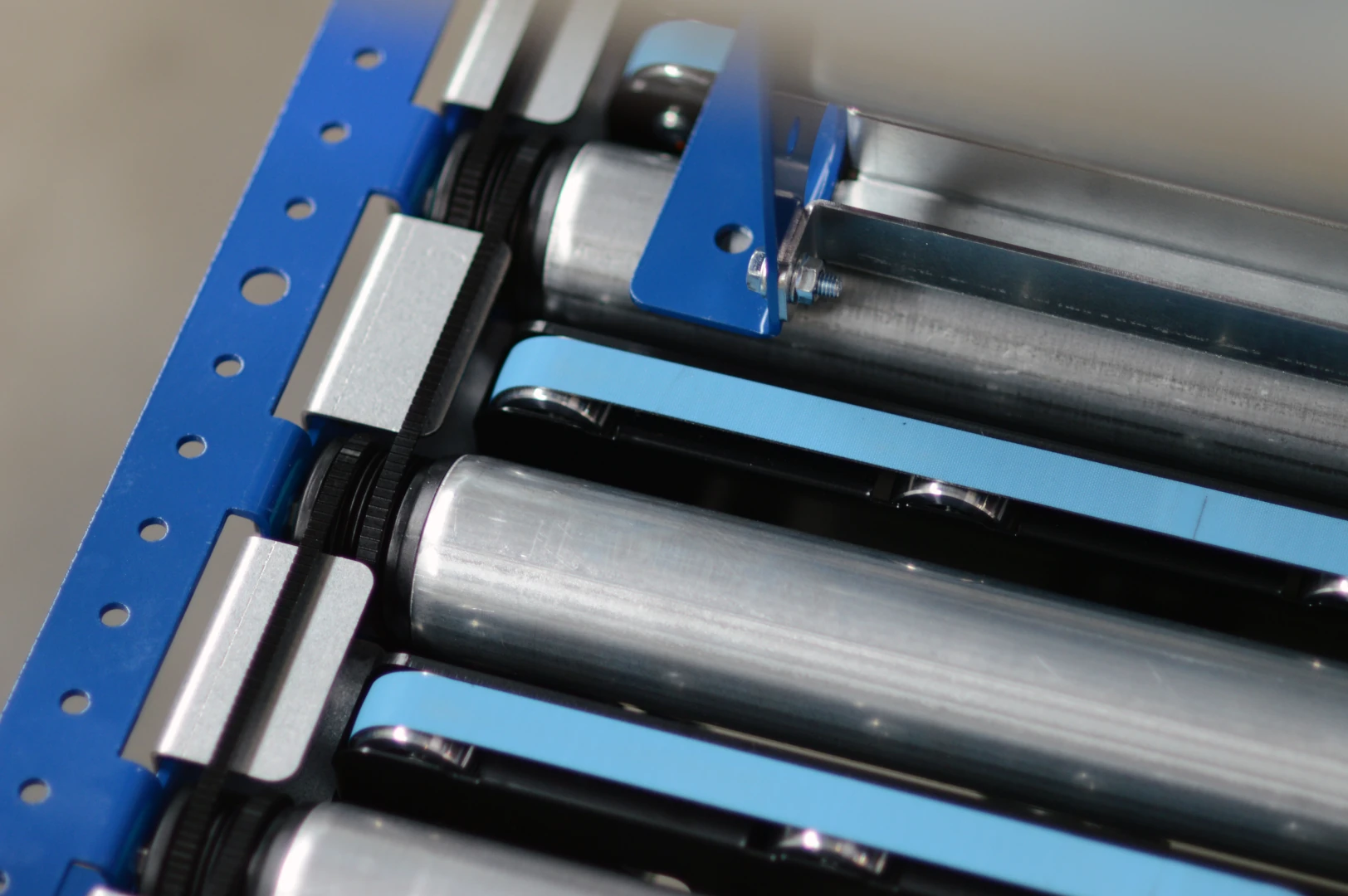
One of the most popular types are belt conveyors, used to transport light and medium loads such as cartons and small products, including food items. Another type is roller conveyors. These can be driven or gravity-based and are suitable for transporting pallets, crates, and cartons. Chain conveyors for heavy loads are also worth mentioning. There are also slat conveyors, commonly used in the food and pharmaceutical industries for transporting bottles or cans.
Other types are also available. Screw conveyors are designed for bulk materials, while vibratory conveyors are used for small elements such as granules or powders. There are also overhead conveyors, accumulation conveyors, vertical conveyors, and modular conveyors. The right choice depends on the size, weight, and shape of the transported goods.
Warehouse conveyors – types worth considering
The table below provides a concise overview of which warehouse conveyors from the MPL Techma offer are worth choosing and what functions they perform.
|
Conveyor type |
Application in the system |
Effect for the warehouse |
|
Roller conveyor |
Transport of crates and bulk packaging |
More efficient picking and reduced employee workload |
|
Belt conveyor |
Light and irregular loads |
Safe transport with minimal risk of damage |
|
Chain conveyor |
Pallet transport |
Reliability under heavy loads |
|
Roller-chain transfer |
Change of transport direction |
Smooth movement without stopping the line |
|
Automatic turntable |
Pallet rotation up to 270° |
Fast and safe redirection of loads |
|
Infeed loading station |
Introducing pallets into the system |
Automation of the first transport stage |
What does a sample goods flow with warehouse conveyors look like?
To further illustrate how conveyors work, let us describe a sample process. It starts at the infeed loading station, where the operator simply places the pallet in a designated spot. From that moment on, the system operates independently. It introduces the load onto the transport line, reducing, among other things, the risk of product damage right from the start.
Pallets then move along chain conveyors which, thanks to their steel construction and high load capacity, can handle intensive use. Wherever a change of transport direction is required, roller-chain transfers and automatic turntables take over. These devices do not disrupt the continuity of movement, helping to avoid downtime typical of manual pallet handling.
In picking zones, the system is supplemented with roller and belt conveyors, enabling safe transport of crates and lighter loads. As a result, employees can focus on inspection and order picking instead of manual handling, which often leads to accidents, delays, and financial losses.
Back to the case study…
After implementing the warehouse conveyor system, the customer noticed a significant improvement in the smoothness of logistics processes. Internal transport was no longer a bottleneck, and the warehouse gained a structure that can be expanded in the future and integrated with additional automation components.
Do you also see that properly selected warehouse conveyors are not a cost, but an investment in safety and growth? They form the foundation of a modern warehouse. If you are wondering how to improve goods flow in your warehouse, MPL Techma experts will help design a solution tailored to the real needs of your logistics operations.
We are a Polish engineering company founded in 2003 by industrial automation enthusiasts. We started with the distribution of components, but quickly moved on to software development, machine design, and complete production lines to better address our customers’ specific challenges.
Today, we design and implement dedicated warehouse automation and internal transport systems for many industries. Our goal is to improve warehousing processes, whether you need a small conveyor system or a highly complex network of devices. Contact us and we will present all available possibilities!
FAQ – types of warehouse conveyors
1. What are warehouse conveyors and what are they used for?
Warehouse conveyors are elements of material handling systems that enable continuous and safe transport of products, package by package. Their use in internal transport automation increases the efficiency of warehouse processes in nearly every industry.
2. What are the most commonly used types of warehouse conveyors?
The most common types include gravity roller conveyors, powered roller conveyors, belt conveyors, and chain conveyors. Each is designed for different loads – from cartons and containers to heavy pallets.
3. When should gravity roller conveyors be chosen?
Gravity roller conveyors are ideal for transporting cartons and containers over short distances where a slope can be used. They provide a simple and efficient way to move loads without the need for motorized drives.
4. What is the difference between powered and gravity roller conveyors?
Powered roller conveyors use motors (e.g. electric or chain-driven), while gravity conveyors rely on the force of gravity and the inclination of the conveyor.
5. What applications are belt conveyors best suited for?
Belt conveyors are mainly used for transporting light products and irregular shapes. They are commonly applied to move crates, carton packages, or bagged goods.
6. What role do chain conveyors play in a warehouse?
Chain conveyors are durable and designed for transporting heavy loads such as pallets in distribution centers. Their use within conveyor lines significantly increases the efficiency of the entire enterprise.
7. Can warehouse conveyors be easily expanded?
Modern warehouse systems are designed in a modular way, allowing conveyor lines to be easily expanded as the company grows. Such automation enables flexible adaptation to changing order volumes.
8. How do conveyors affect warehouse efficiency?
The use of conveyors enables smooth transport and reduces manual handling. In practice, this increases efficiency, improves safety, and reduces the number of operational errors.
9. What should be considered when choosing conveyors?
Key factors include the type of products transported, load weight, the nature of the logistics system, and industry-specific requirements. A wide selection of conveyors allows solutions to be tailored to the real needs of a production facility or warehouse.
10. Why are conveyors crucial in warehouse automation?
Conveyors enable efficient product transport and form the foundation of automation in modern material handling systems. They increase productivity and organize goods flow throughout the entire warehouse.