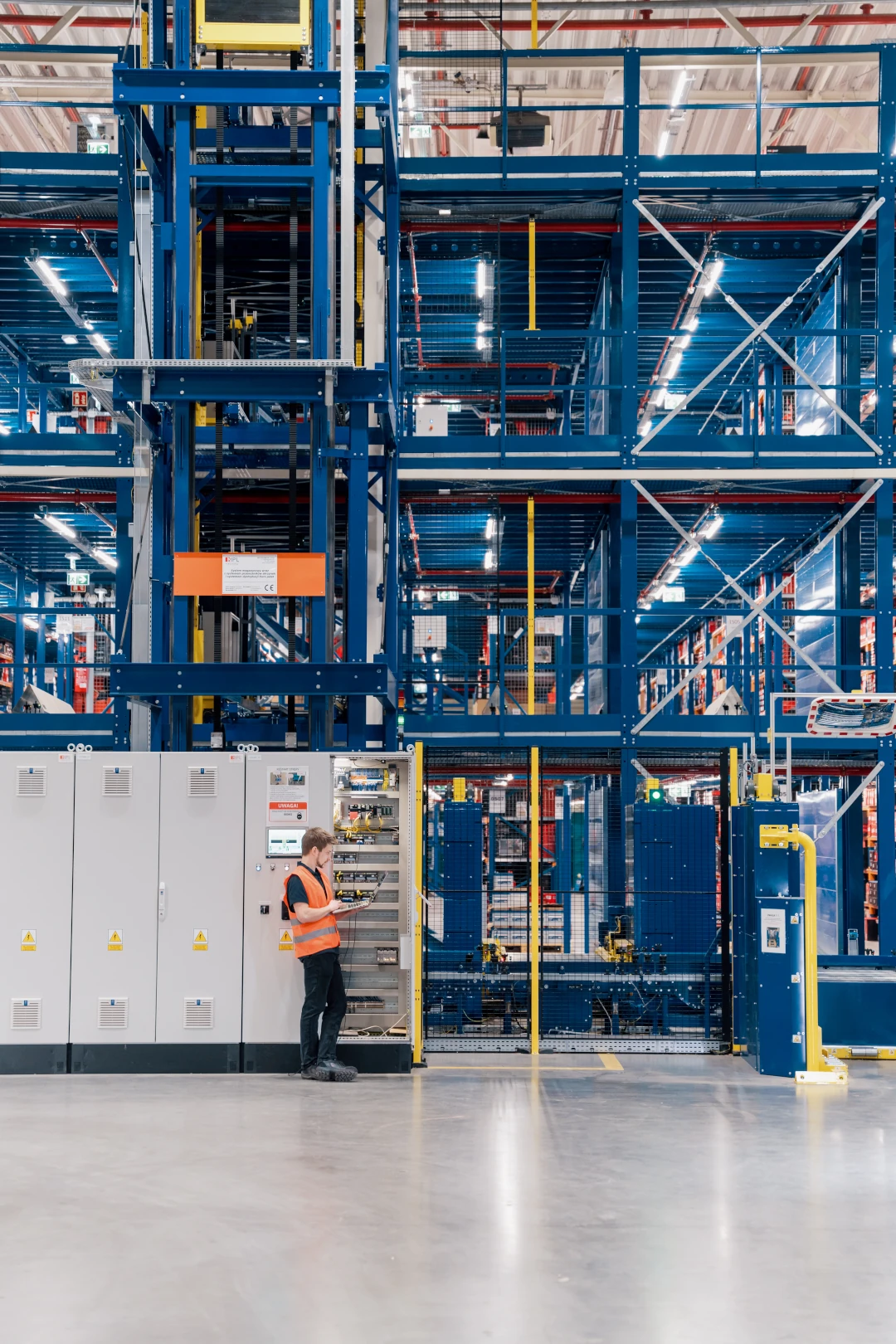
What is a logistics chain?
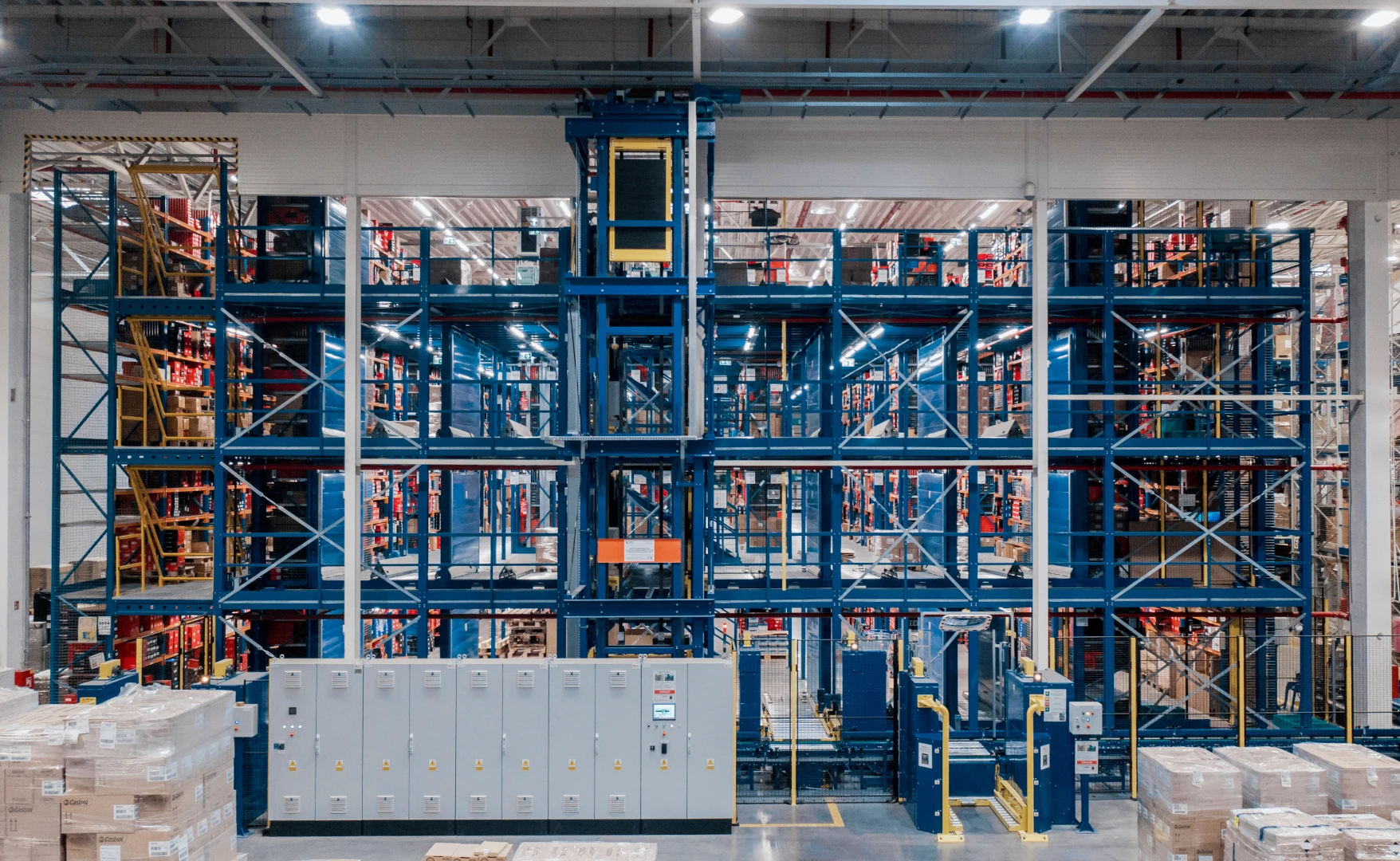
Every package in a company follows its own path – from the manufacturer, through the warehouse and transport, all the way to the customer. This path is what we call the logistics chain. It is a system that connects people, processes, and technologies to ensure that goods arrive on time, in the right quantity and quality.
An efficient logistics chain brings more benefits than might seem at first glance. It reduces costs while simultaneously improving employee safety and supporting business growth. In this article, we explain how to streamline the logistics chain within your own facility so that your company can perform at its best.
The logistics chain – is it just transport and warehousing?
According to the definition in the Encyclopedia of Management, a logistics chain is a linearly ordered set of physical and legal entities (manufacturers, distributors, etc.) carrying out logistics operations in order to deliver material from one place to another (in the case of products intended for production purposes) or to the end user.
The logistics chain is created through cooperation between suppliers of materials and raw materials, carriers, warehousing companies, agents, manufacturers, distribution network companies and organizations, and customers, with the aim of jointly coordinating activities in time and space.
A logistics chain is therefore a coherent system of processes in which the key element is the movement of goods from their point of origin to the final customer. It includes not only the physical flow of products, but also the flow of information, decisions, and data that control the entire process.
The logistics chain connects:
-
suppliers of raw materials and components,
-
production,
-
warehouses and distribution centers,
-
internal and external transport,
-
and finally – the customer.
The essence of this concept? Delivering the right product, at the right time, to the right place, in the right quantity, at the lowest possible cost while maintaining quality. It may sound fairly simple, but appearances can be deceiving. This is one of the most complex areas of a modern enterprise.
What are the stages of the logistics chain?
Below we describe an example course of a logistics chain.
1. Planning and design
This is the starting point, involving analysis of flows, product turnover, inventory levels, and order fulfillment methods.
2. Goods receipt and identification
Goods must be registered, inspected, and assigned within the system according to all identification features, because errors at the beginning generate problems at later stages.
3. Storage and space management
A warehouse is not just a storage location, but an active and equally important element of the logistics chain.
4. Internal transport
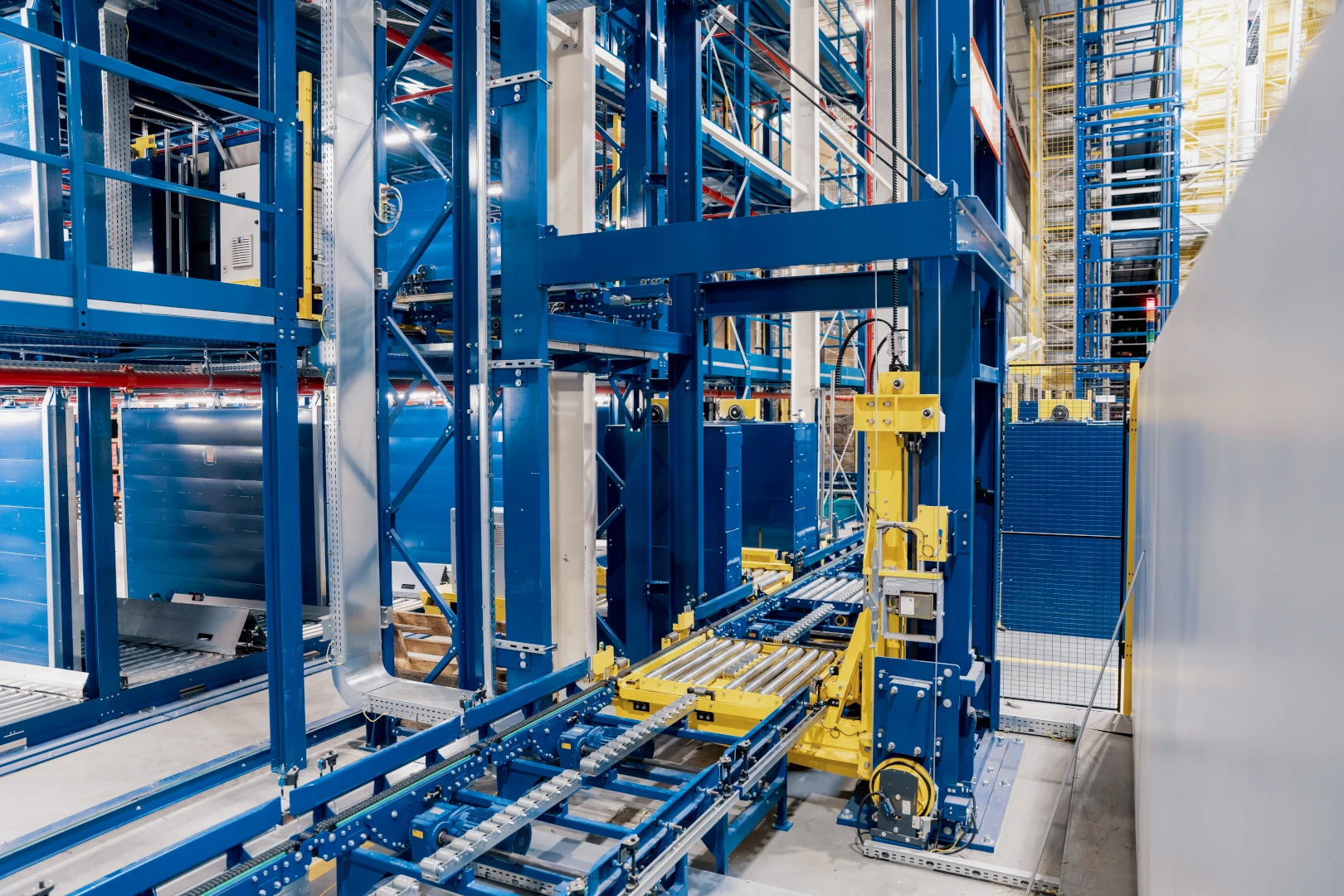
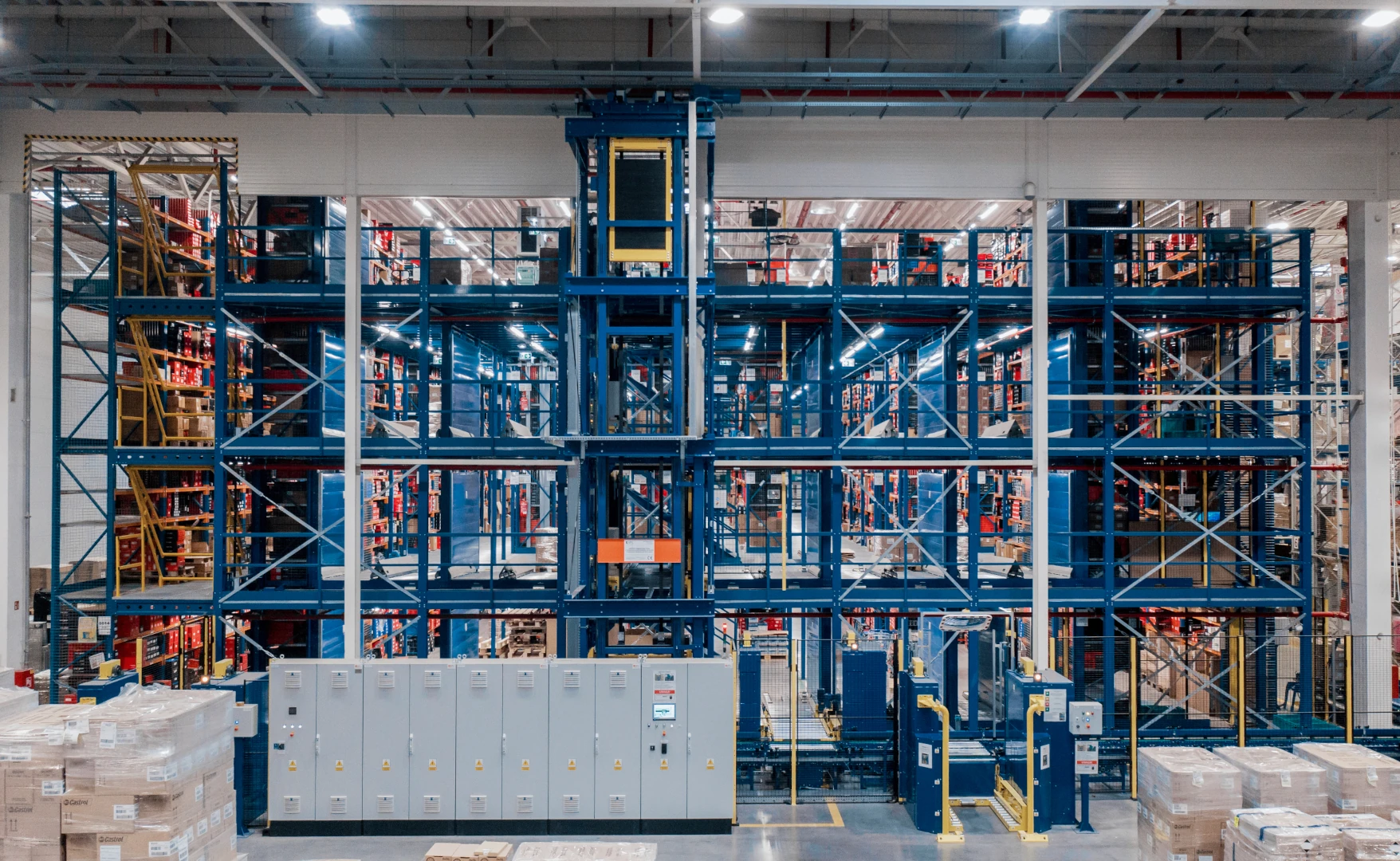
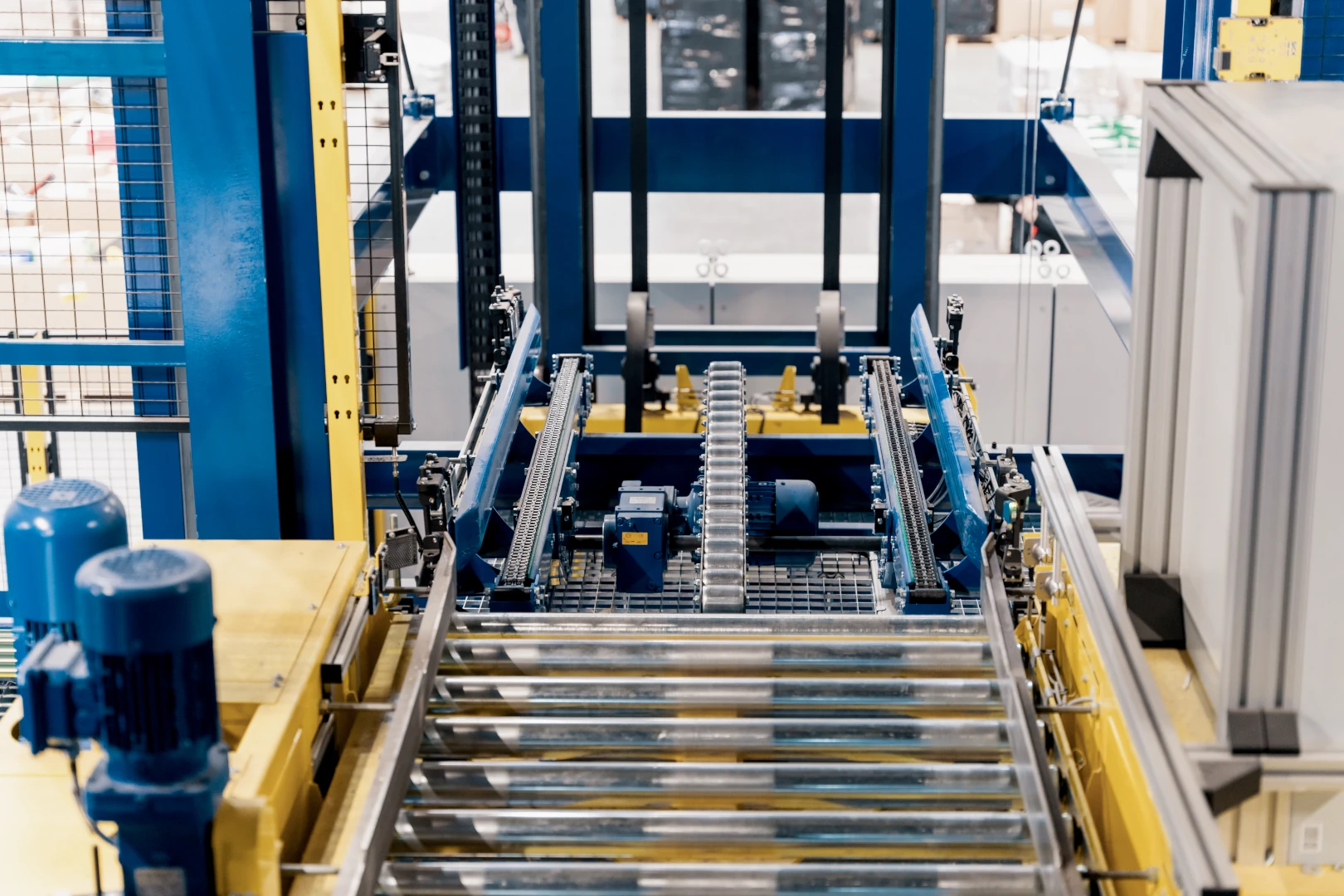
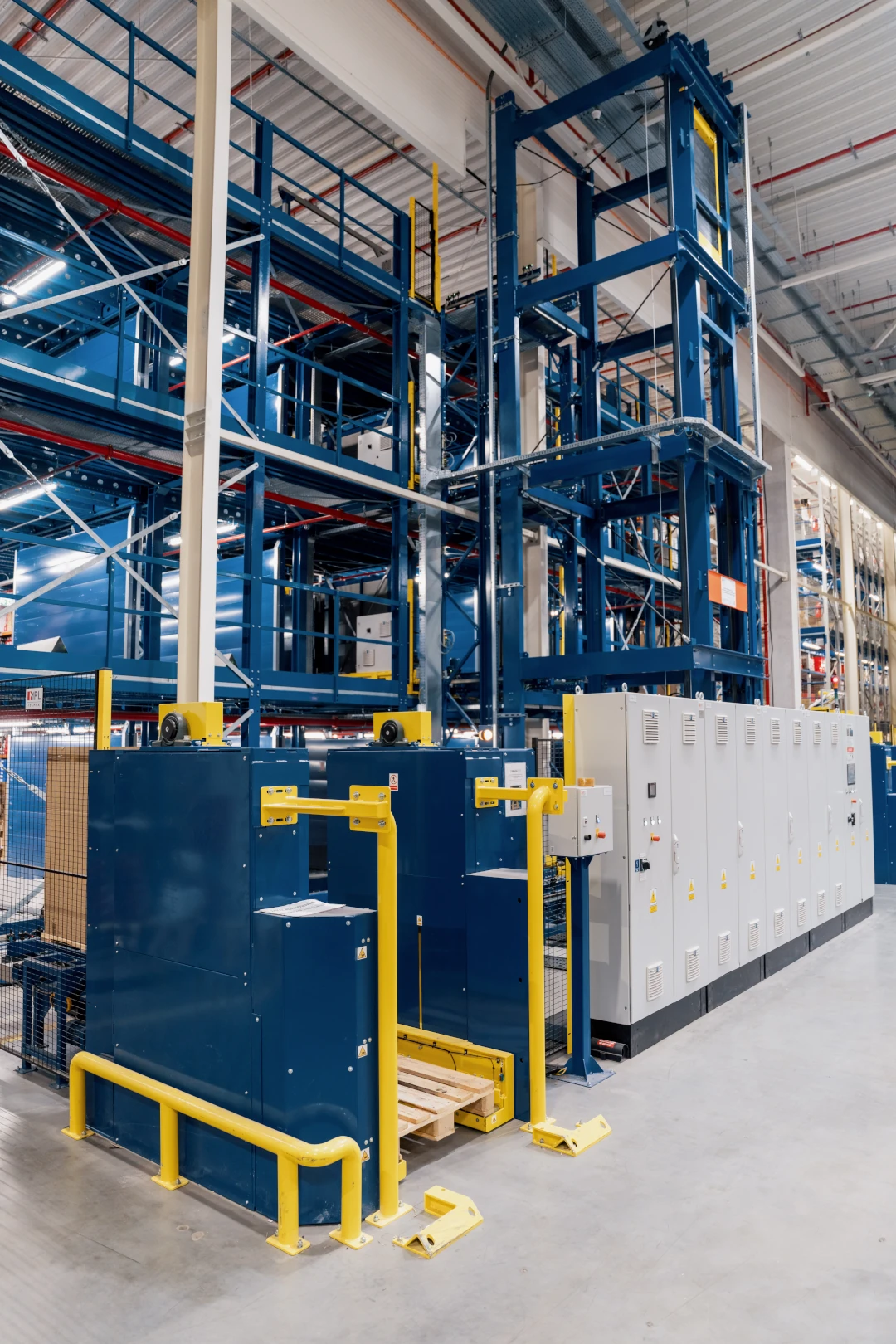
The movement of goods between warehouse zones, production, or shipping areas is increasingly carried out using automated systems such as conveyors, warehouse lifts, or stacker cranes.
5. Order picking and preparation
As with internal transport, owners increasingly choose to support this stage with automation and dedicated equipment.
6. Dispatch and distribution
The final stage, in which goods leave the warehouse and reach the customer or the next link in the chain.
Logistics chain vs. supply chain – an important distinction
These terms absolutely do not mean the same thing, which is worth keeping in mind.
-
The supply chain covers all activities related to the creation of a product, from sourcing raw materials, through production, to sales and after-sales service.
-
The logistics chain is an integral part of it and focuses on the physical flow of goods, as well as the management of warehousing, transport, and distribution.
Simply put, the supply chain answers the question of what and why we produce, while the logistics chain answers how fast we deliver it.
Why does supply chain automation mean growth?
An automated logistics chain means:
-
greater repeatability,
-
fewer errors,
-
better use of warehouse space,
-
improved work safety,
-
access to real-time data.
Intralogistics systems provide support here, as they integrate mechanics, automation, and software, significantly simplifying and accelerating daily operations within a facility.
The logistics chain is a broad concept…
Logistics services within the logistics chain allow companies to focus on their core competencies while outsourcing certain processes to specialized operators. Logistics outsourcing includes both transport and freight forwarding consulting, as the logistics chain covers virtually every stage.
Warehousing is not just storage, but also efficient management of receiving, storage, picking, and shipping of goods.
Additional services also include labeling and many other activities. The logistics chain varies depending on the type of enterprise and applies to industrial, commercial, and service companies. In industrial logistics, every stage - from production, through cold storage warehousing, to distribution - is carefully organized.
How do we view the logistics chain at MPL Techma?
At MPL Techma, from the very beginning, we have focused on solving our customers’ technical challenges. The experience gained from designing machines, production lines, and—since 2019—automated high-bay warehouses allows us to view the logistics chain from a bird’s-eye perspective.
Every warehouse, every production process, and every flow is different—and we know this well. That is why our intralogistics solutions, from stacker cranes, conveyors, lifts, and transport carts to dedicated control systems and warehouse analytics, are tailored to a specific logistics chain.
When the logistics chain functions efficiently at every stage, the business develops and grows dynamically. That is why at MPL Techma we design and deliver equipment and systems that streamline logistics chains, especially within production facilities. Our stacker cranes automate pallet storage and retrieval, saving space and reducing errors.
Transport carts, lifts, and warehouse conveyors support daily operations by accelerating internal transport and, importantly, can be integrated with AGV or AMR systems. For non-standard requirements, we design dedicated solutions tailored to the type of goods and the facility layout. Everything is complemented by warehouse analytics and control software, giving each customer full control over their warehouse. We invite you to cooperate!
FAQ – logistics chain
1. What is a logistics chain?
A logistics chain is a set of interconnected links responsible for the flow of goods from the manufacturer to the buyer. It enables coordination of all warehousing, transport, and IT-related activities within a company.
2. How does a logistics chain differ from a supply chain?
A logistics chain focuses on the physical flow of materials and warehouse management, while the supply chain includes the entire process of production, sales, and customer service. Both systems work together to ensure smooth operations and optimal material flow.
3. What are the main types of links in a logistics chain?
The links in a logistics chain include suppliers, warehouses, distribution centers, internal and external transport, and the end consumer. Each link is designed to increase efficiency and ensure smooth material flow.
4. Why does the length of the logistics chain matter?
The length of the logistics chain affects order fulfillment time and the smoothness of goods flow. The more links involved, the more important it becomes to coordinate processes and monitor the entire logistics chain.
5. What do logistics services in the chain include?
Logistics services include transport, warehousing, freight forwarding, and additional activities that improve goods flow. Thanks to these services, companies can optimize supply and increase operational efficiency.
6. How does a WMS system support the logistics chain?
A WMS system enables real-time monitoring and management of material flow within the warehouse. It ensures work efficiency, inventory control, and optimal task allocation across the entire logistics chain.
7. How does automation increase logistics chain efficiency?
Automation enables fast order processing, error reduction, and efficient goods transport within the warehouse. At the same time, it improves employee safety and allows better management of overall material flow.
8. Why is the type of warehouse important in the logistics chain?
The type of warehouse affects storage methods and the selection of transport equipment. Choosing the right warehouse type enables optimal material flow and increases the efficiency of the entire logistics chain.
9. How does MPL Techma support customers’ logistics chains?
MPL Techma designs dedicated stacker cranes, conveyors, lifts, and transport carts to streamline goods flow in warehouses and production facilities. With our systems, customers can increase efficiency, optimize warehouse processes, and maintain full control over their entire logistics chain.