Automation of palletizing and end-of-line processes - how to streamline shipping
In every warehouse, there comes a time when goods need to be properly prepared for shipment. This is when the real work begins: order picking, arranging products on carriers, securing the load, and final distribution. These are among the most demanding stages of warehouse operations, where delays, errors, and additional costs are common. For this reason, many warehouse owners are turning to the automation of palletizing and end-of-line processes. But will this solution work for you? What exactly does it involve? We explain in this article!
Palletizing automation: safer and more efficient operations
The term “palletizing” is fundamental in the industry – it refers to arranging goods on pallets in a way that ensures their safety and stability during transport. Automating this process means machines take over the related operations, including lifting, arranging, stabilizing, and wrapping products.
In practice, automated palletizing can involve:
-
Receiving products from the production line,
-
Arranging them in specific patterns on the pallet (layered or according to a designated scheme),
-
Securing the load with stretch film or other protective materials,
-
Transferring the finished pallet to the shipping area.
Why is automation worth it?
Manual palletizing requires significant manpower and physical effort. Workers must lift heavy products, maintain pallet balance, and ensure load stability. Automation addresses these issues by:
-
Increasing efficiency – machines arrange products faster and more precisely than humans.
-
Improving safety – employees no longer need to lift heavy items or perform repetitive, sometimes hazardous movements.
-
Minimizing errors – automation consistently follows the same arrangement pattern and monitors pallet stability.
-
Reducing costs – fewer workers are needed for repetitive tasks, and there is less waste from toppled or damaged loads.
Shipping processes become more predictable, allowing the company to handle larger orders without extra costs or limitations.
How MPL Techma supports palletizing automation
Did you know that automating end-of-line processes isn’t just about palletizing robots? It actually involves an entire chain of devices working together to ensure loads are secured, transported, and prepared for shipment. At MPL Techma, we provide solutions that streamline these stages, regardless of the type of goods stored in the end-of-line area.
1. Pallet turntables – smooth pallet maneuvering
What makes changing the direction of pallet transport easier without manual handling? A pallet turntable! This is ideal for smoothly transferring pallets from the palletizing robot to the wrapper, labeling station, or further to stackers or AGVs. Turntables accelerate the transfer of pallets to the next stages: wrapping, storage, labeling, or loading.
2. Inspection stations – safety before shipping
Inspection stations are installed above conveyors to check the condition, position, completeness, and any damage to the load. They can also be integrated with robots to eliminate the most monotonous tasks. If you want to reduce the risk of claims, inspection stations are essential.
3. Warehouse manipulators – fast lifting and arranging
Warehouse manipulators with grippers relieve employees from the most demanding manual tasks. They lift, transport, and arrange large or delicate items on pallets, plates, or custom carriers. They are ideal for oversized loads or products requiring careful handling.
4. Conveyors for automated load flow
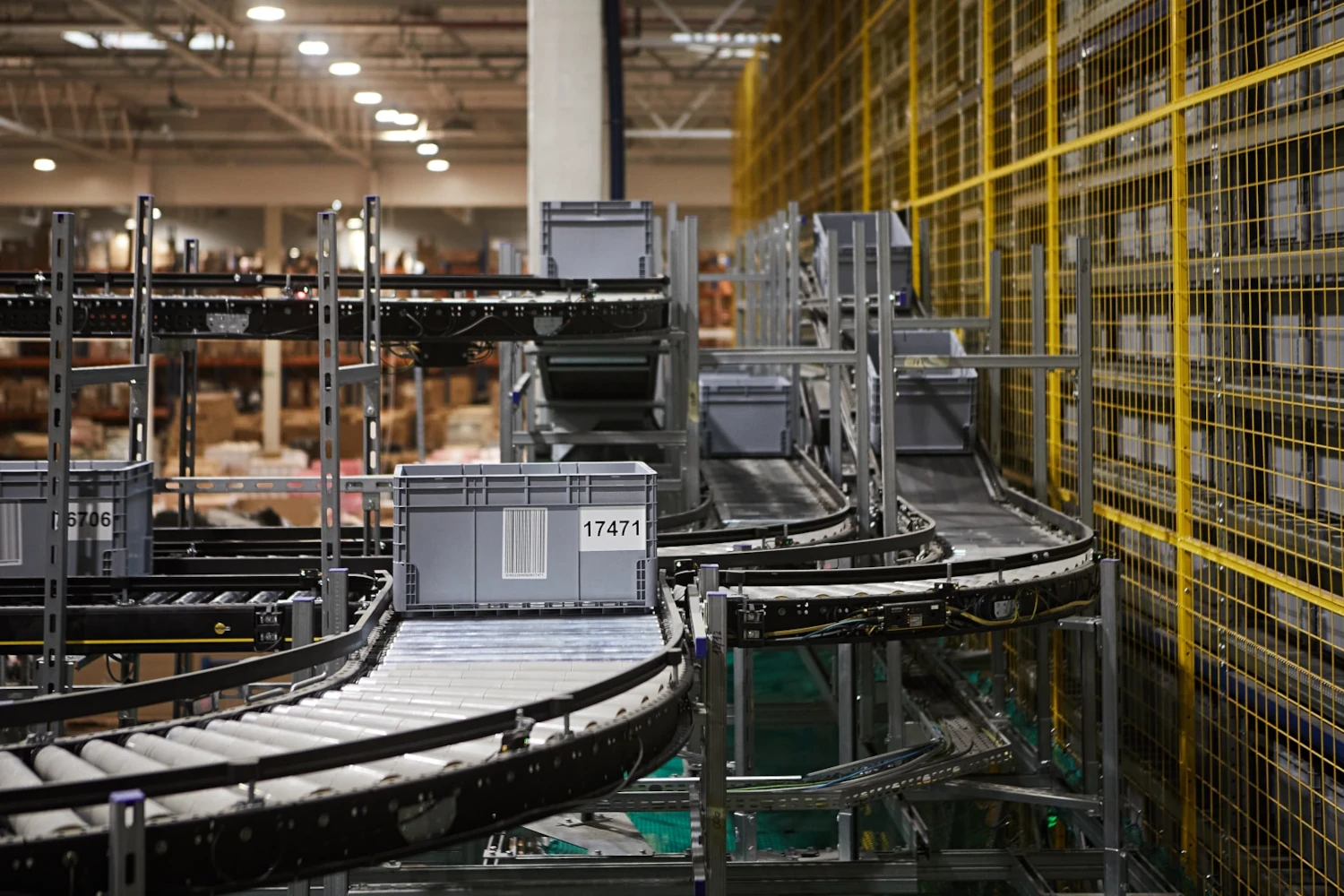
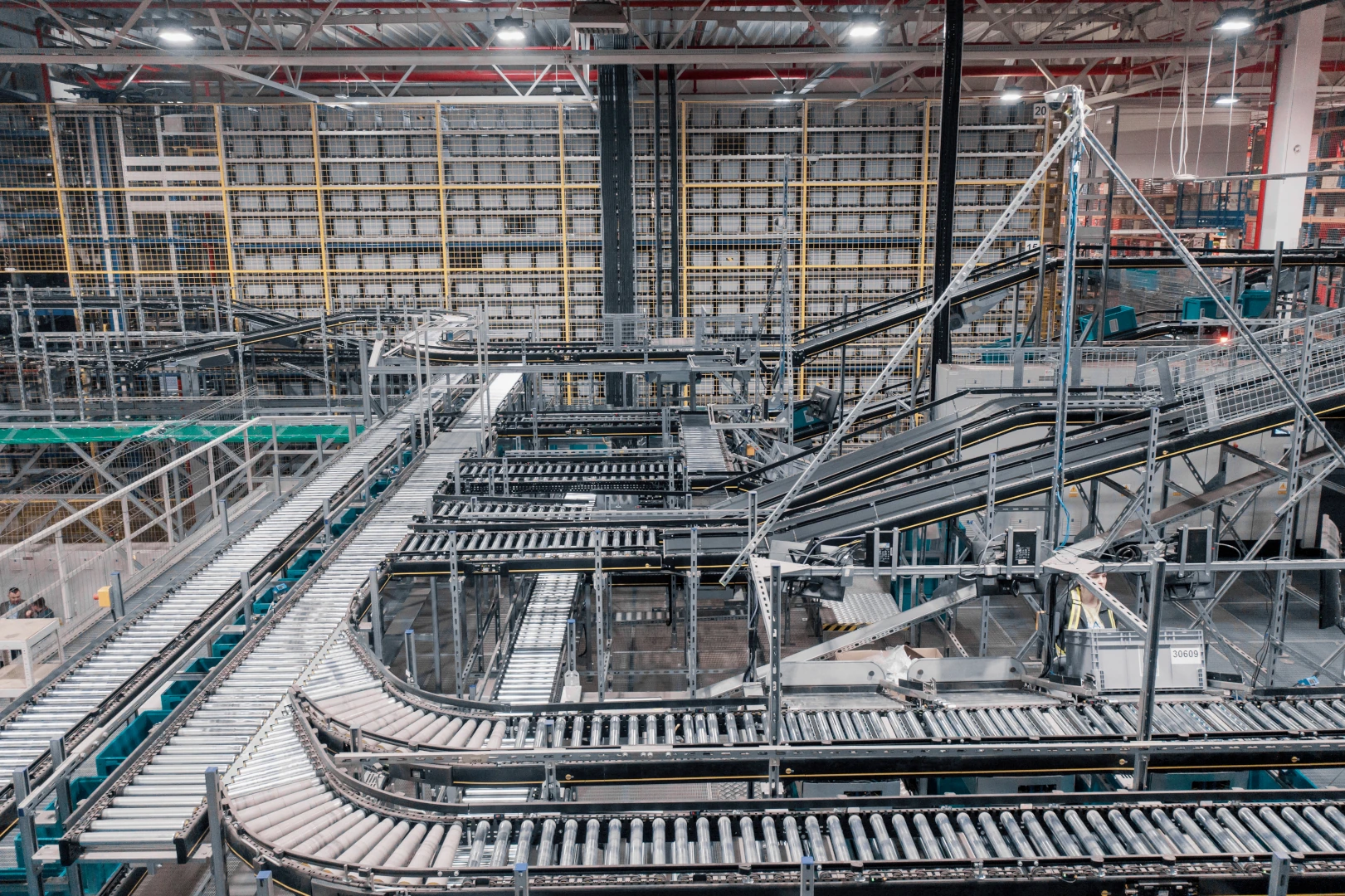
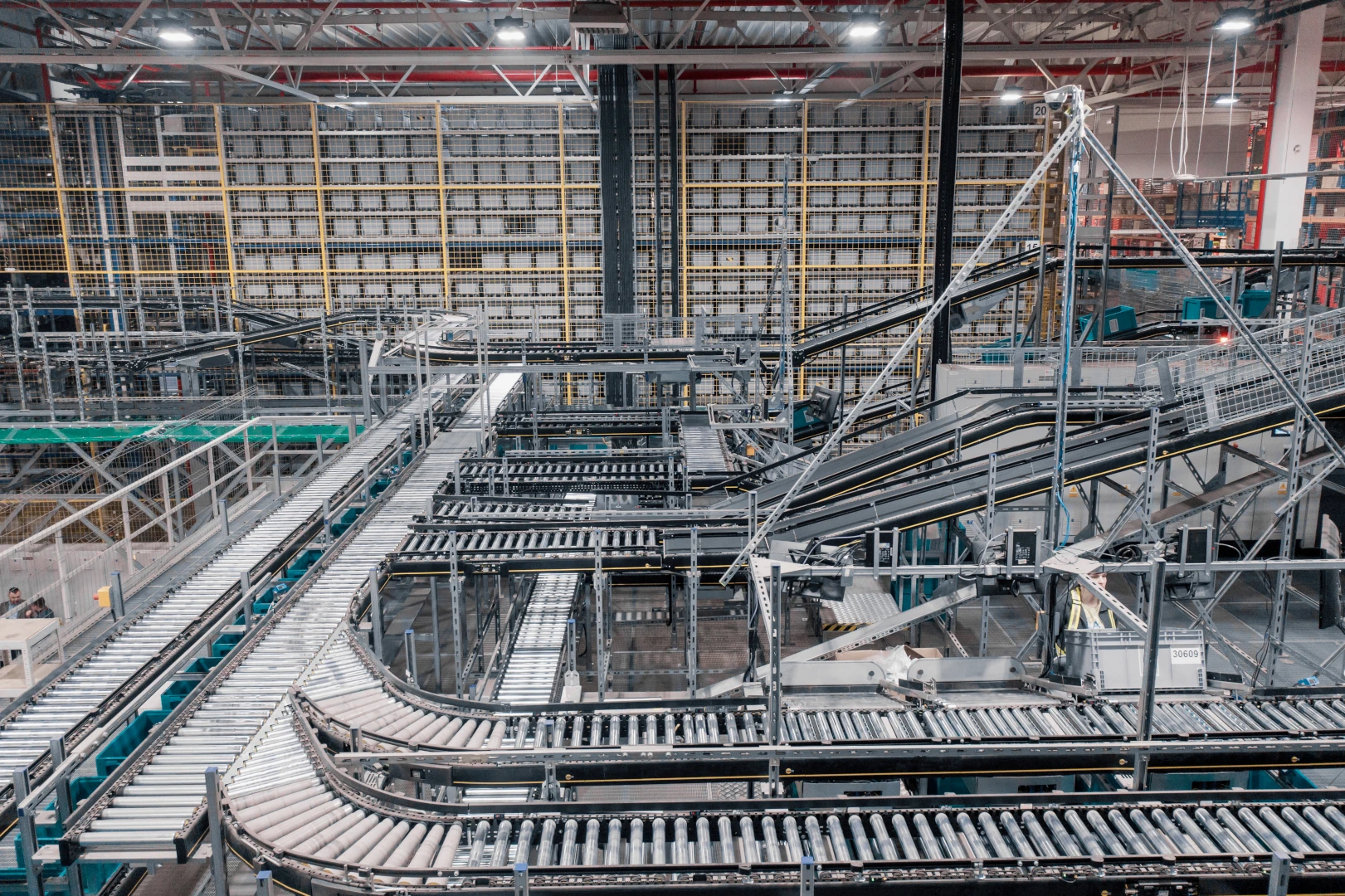
Key devices in any automated warehouse include roller, chain, and belt conveyors. They connect robots, inspection stations, wrappers, lifts, and stackers into a single intelligent system, allowing goods to move seamlessly from order picking to the shipping area.
5. Pallet lifts – quick vertical transport
For warehouses with mezzanines or multiple levels, pallet lifts are essential for moving finished loads vertically.
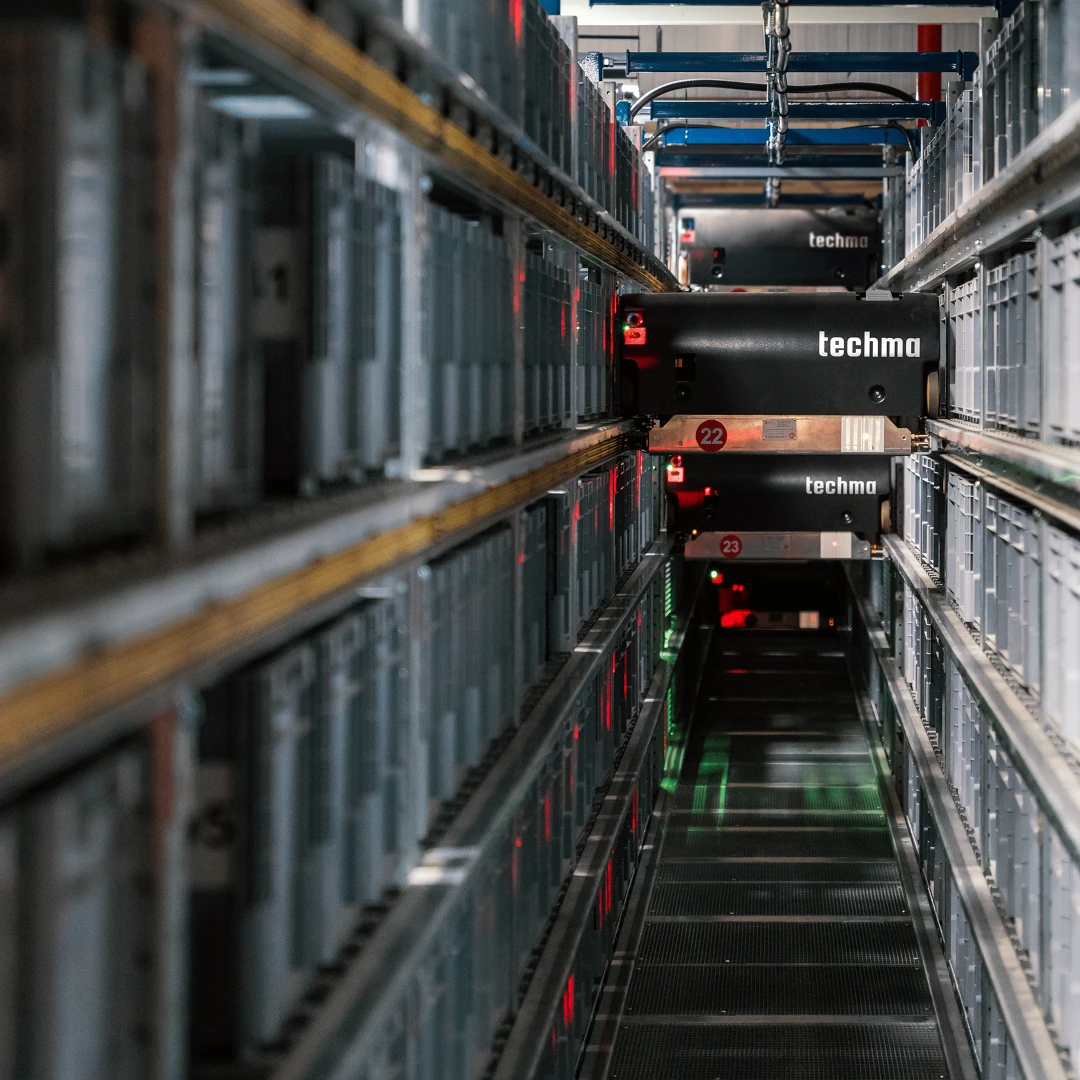
6. Stackers and shuttle systems – automatic pallet handling
After palletizing, pallets can be automatically handled by a stacker or shuttle system, delivering the load directly to the correct storage location.
How palletizing automation fits into overall intralogistics
Here’s an example: in an electronics warehouse, products move from the picking area to a palletizing robot, which arranges them in stable layers according to pallet height and capacity. An automatic wrapper secures the load with stretch film, and the finished pallet is transferred to the shipping area.
At MPL Techma, palletizing automation covers the entire chain of devices:
-
Pallet turntables facilitate smooth rotation between robot, wrapper, and stacker,
-
Inspection stations check load completeness and safety,
-
Warehouse manipulators lift and arrange items,
-
Conveyors connect all stages into an intelligent system,
-
Pallet lifts support vertical transport,
-
Stackers and shuttle systems automatically move pallets to their storage locations.
This approach optimizes automation processes in your facility.
Palletizing and end-of-line automation in a warehouse with MPL Techma
Automation doesn’t have to be a limited investment. MPL Techma systems can be expanded with additional devices, systems, and technologies. The warehouse grows with your business, and changes in production or load types don’t require rebuilding the entire system, saving time and cost.
Palletizing and warehouse automation with MPL Techma gives your operations a competitive edge, making the warehouse faster, safer, and more cost-effective, no matter how much your business grows.
FAQ: warehouse palletizing automation – common questions
-
What is the palletizing process in a warehouse?
Palletizing involves arranging products (boxes, parcels, crates, or containers) on a pallet in a stable and safe way. It includes layer formation, inserting separators, and preparing the load for storage or shipping. -
What are the benefits of palletizing automation?
Automation increases efficiency, reduces downtime, and improves consistency. Robotics make the process more precise and reduce costs caused by errors or load damage. -
What is a palletizer and where is it used?
A palletizer is a device or industrial robot that automatically arranges products on a pallet according to a programmed scheme. It is suitable for bulk packaging, boxes, bags, and containers across various logistics and production industries. -
Does automation mean operators are no longer needed?
No. Operators still manage, supervise, and configure the system but no longer perform heavy, repetitive tasks. Automation improves ergonomics and reduces employee turnover. -
How do industrial robots determine pallet stacking patterns?
Robots use software that can be configured for different layouts, pallet heights, and product parameters. -
Can robotic palletizing work in a small warehouse?
Yes, modern systems can be compact and designed for limited space, increasing efficiency even in constrained areas. -
What devices are included in a robotic packing and palletizing process?
Depending on implementation: palletizing robots, conveyors, wrappers, inspection stations, lifts, depalletizing systems, and line management interfaces. Together, they form a cohesive logistic chain ensuring continuous operations. -
Does automation improve reliability and safety in a warehouse?
Yes. Robots work consistently, reducing the risk of injuries, errors, and load damage. Stable arrangements and automated pallet securing significantly increase process reliability. -
When should palletizing be robotized?
When order volume grows, downtime occurs, operators are lacking, or packing becomes inefficient. Automation improves flexibility, cost optimization, and handling of various products from boxes to containers and bulk packaging. -
What other devices can support automation?
Pallet turntables, roller, belt, and chain conveyors, pallet lifts, stackers and shuttle systems, inspection stations, and warehouse manipulators. They make the automation process faster, more reliable, and less physically demanding for operators.