Intelligent storage of finished products and semi-finished goods - a competitive advantage
It might seem that a warehouse is just a room full of goods. In practice, however, this space largely determines the smoothness of the entire production process. The way finished products or semi-finished goods are stored directly affects order fulfillment speed. A well-planned warehouse ensures continuity of production, safety, and reduces unnecessary costs. Here’s how to optimize storage of finished products and semi-finished goods in your company.
Storing finished products and semi-finished goods is no small matter
You know that production needs are changing faster than ever. The world is accelerating, and companies must manage shorter production runs, greater product diversity, and more variable demand. A scalable warehouse designed for product storage allows businesses to respond to these changes without losing operational flow.
Cost is another key factor. Storage must be as efficient as possible to save time, space, resources, and employee potential. Automation improves storage efficiency, reducing losses and often eliminating them entirely.
Safety is equally important. If you want to minimize product damage and claims, thoughtful storage of finished products is essential. Automated intralogistics systems reduce accidents by limiting the need for employees to perform hazardous tasks manually.
The conclusion is clear: storing finished products and semi-finished goods is significantly more efficient with automated solutions, which we will describe next.
Automated stackers
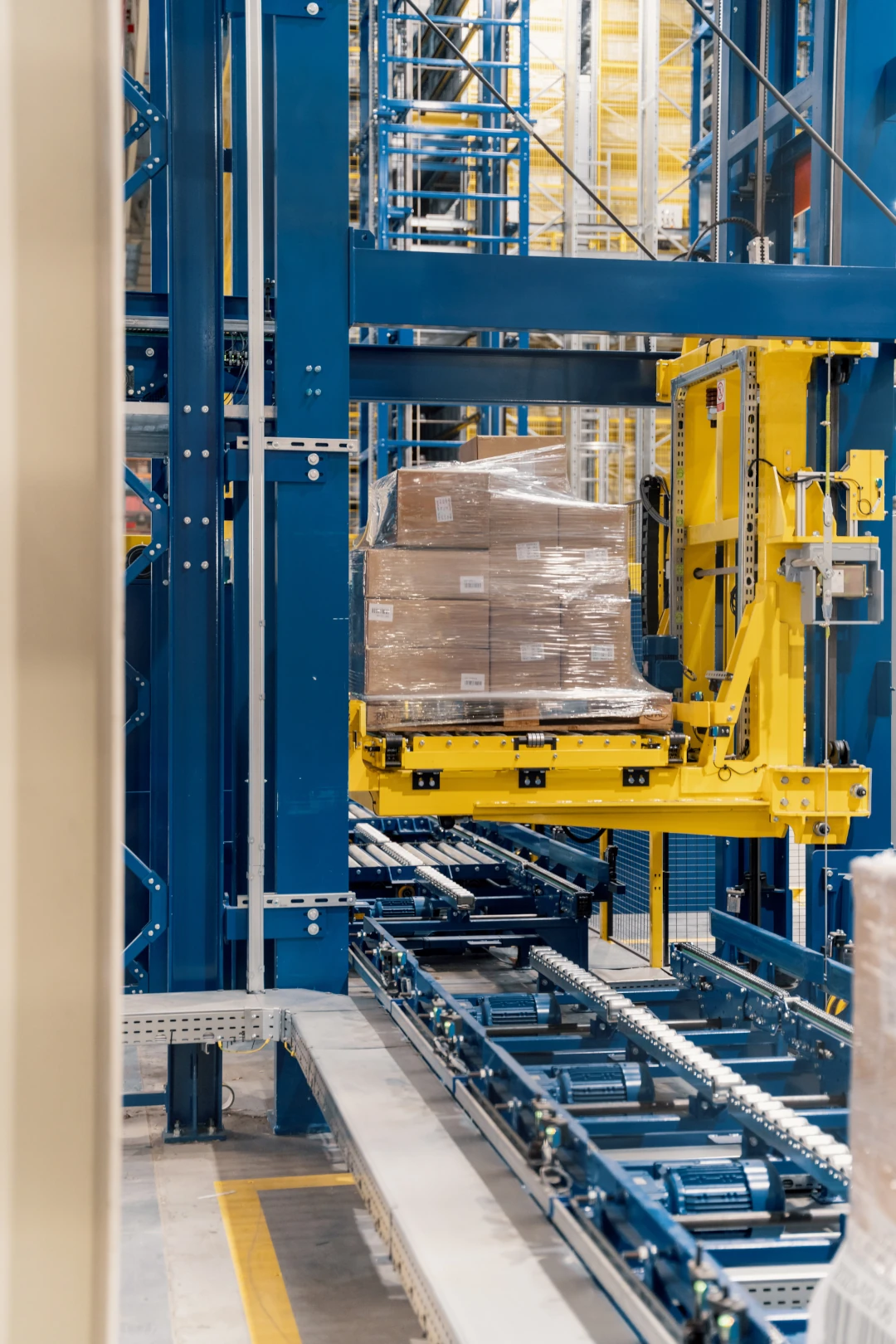
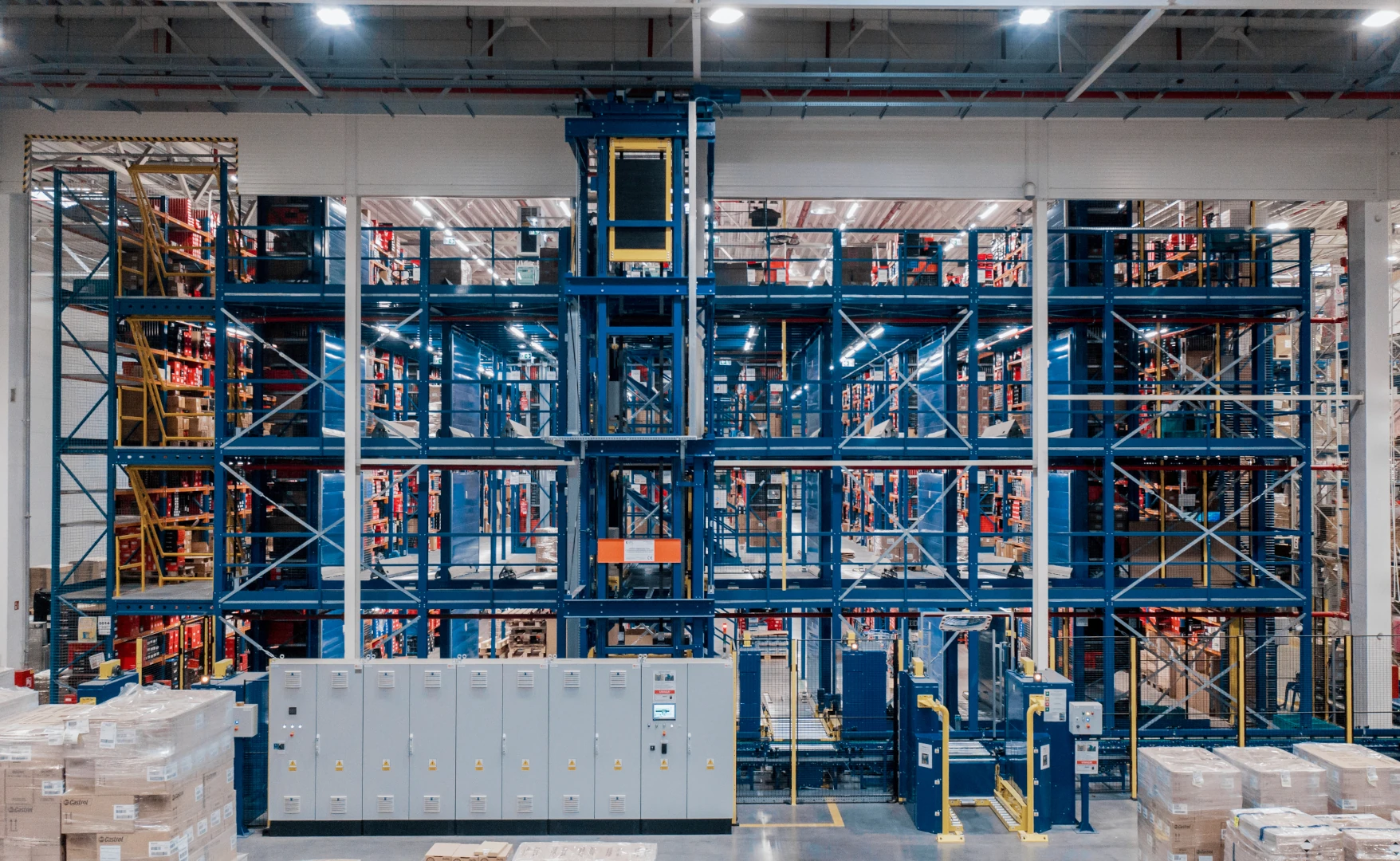
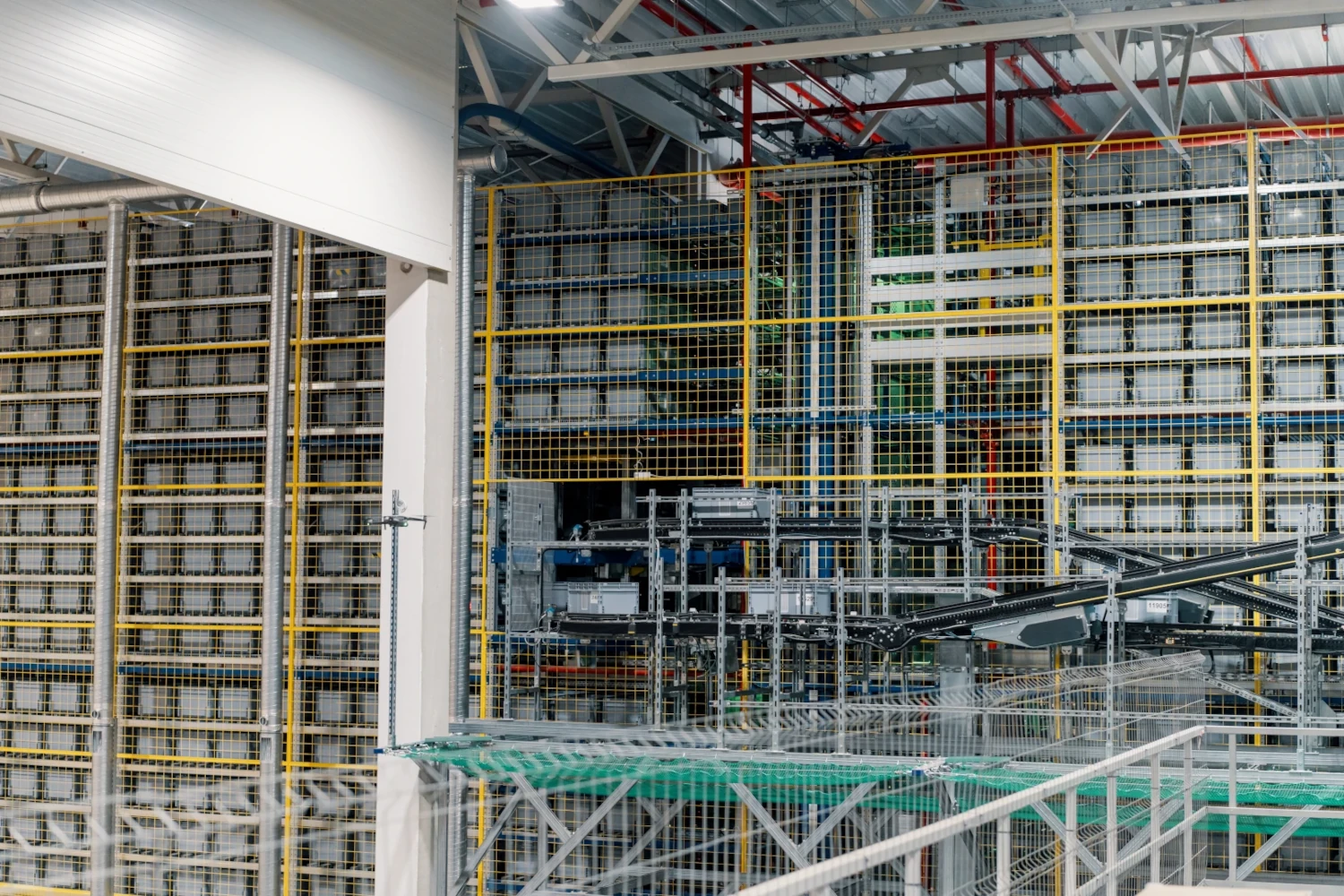
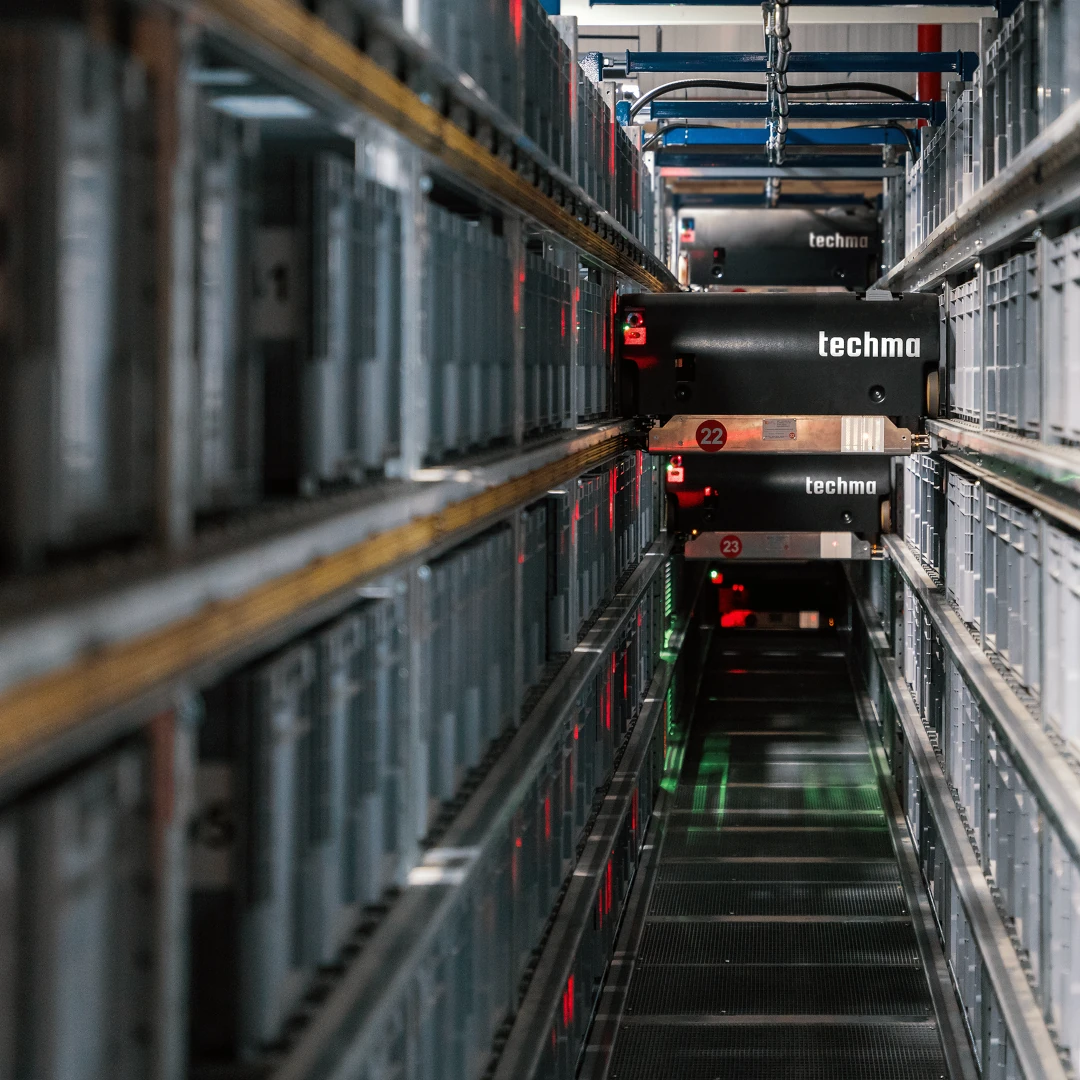
Stackers are part of automated high-bay warehouses. They move and arrange goods in the warehouse, traveling through rack aisles to pick up and place pallets in designated locations.
Benefits of solid stackers include:
-
Full utilization of warehouse volume, including heights and spaces inaccessible or unsafe for forklift operators.
-
Instant access to any storage location.
-
Fewer errors due to software-controlled operations.
-
Consistent, repeatable performance regardless of time of day or workload.
Stackers are effective for storing both finished products and semi-finished goods, especially in facilities with high turnover or fluctuating demand. Look for devices designed for easy expansion, whether adding capacity, tracks, or integration with additional equipment.
Transport carts and automated vehicles
Transport carts, including AGV/AMR solutions, move products between lines, buffers, and warehouses.
Why are companies adopting them more frequently?
-
Automating repetitive transport tasks allows employees to focus on more complex and valuable warehouse processes.
-
They improve safety by reducing forklift traffic in high-risk areas.
-
They provide repeatable performance in continuous production processes.
Carts can operate fully autonomously or semi-autonomously, and routes and functions can expand as the facility grows. They are particularly effective for transporting semi-finished goods between production stages and servicing intermediate warehouses.
Warehouse lifts
In many production facilities, vertical logistics is a major challenge. This is understandable, as multi-level storage cannot rely solely on manual handling.
Warehouse lifts:
-
Reduce transport cycle time,
-
Relieve employees of heavy lifting,
-
Safely transport goods, even large or heavy items,
-
Can be integrated with conveyors and stackers to create full vertical-horizontal transport chains.
Warehouse conveyors – the foundation of smooth material flow
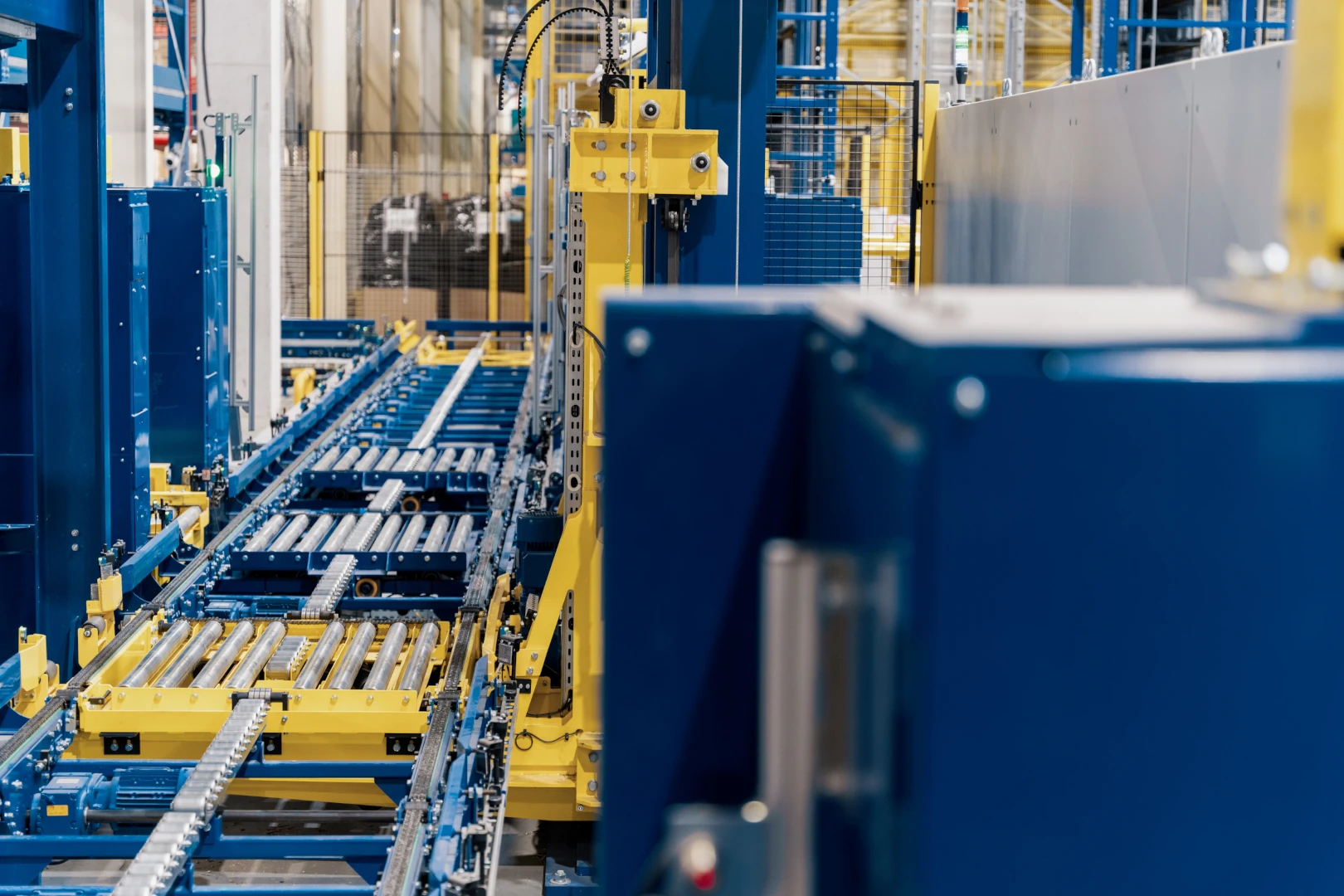
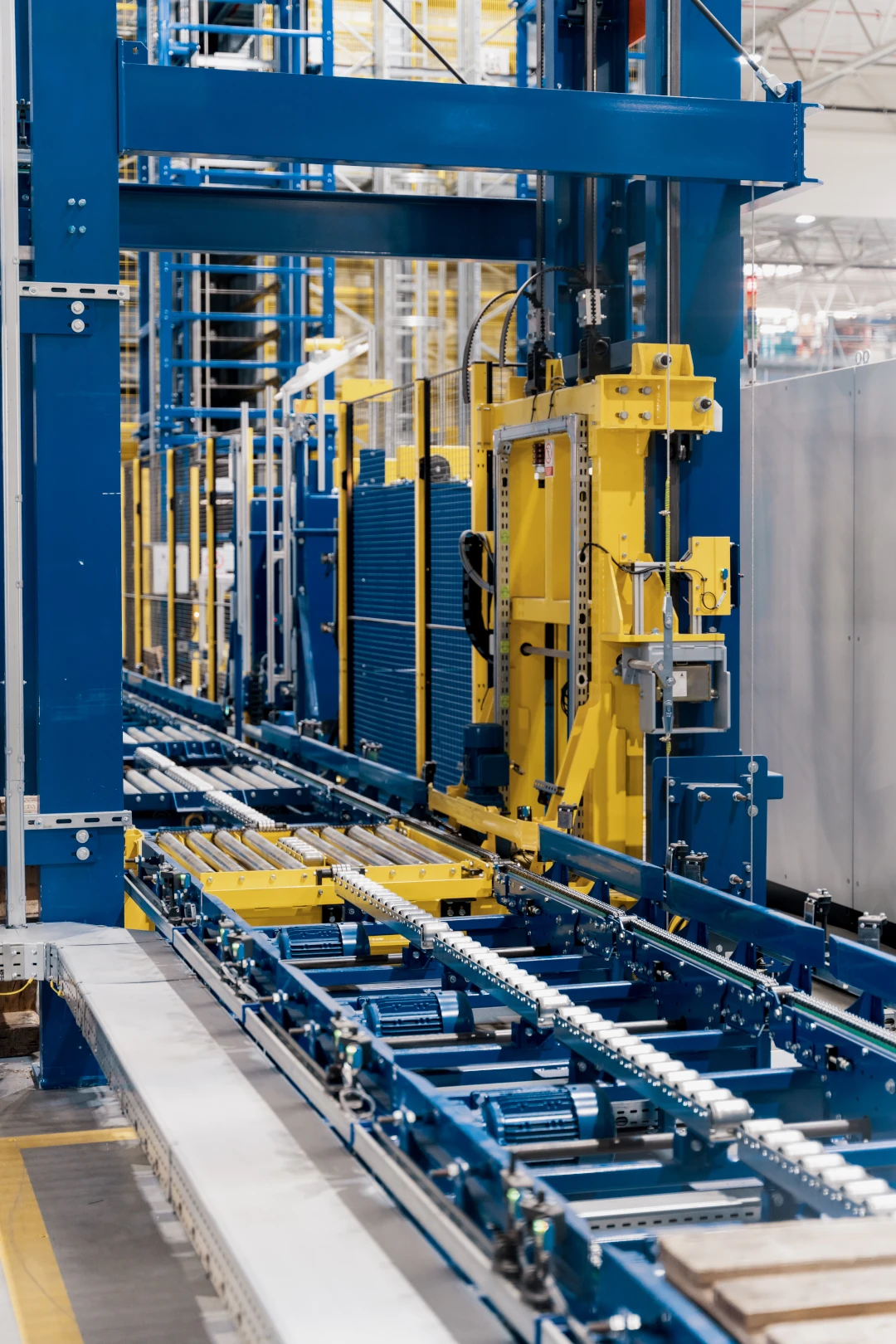
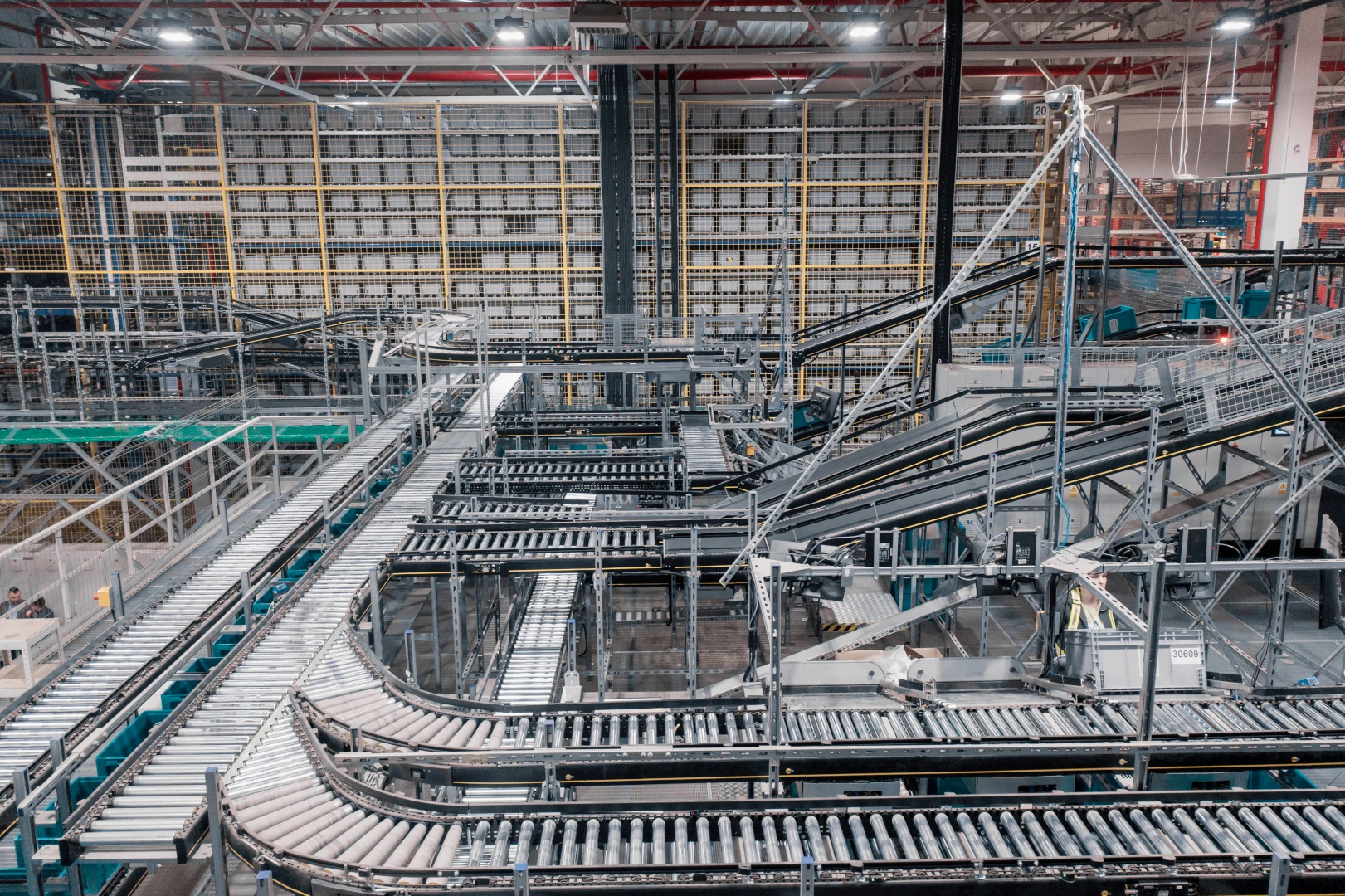
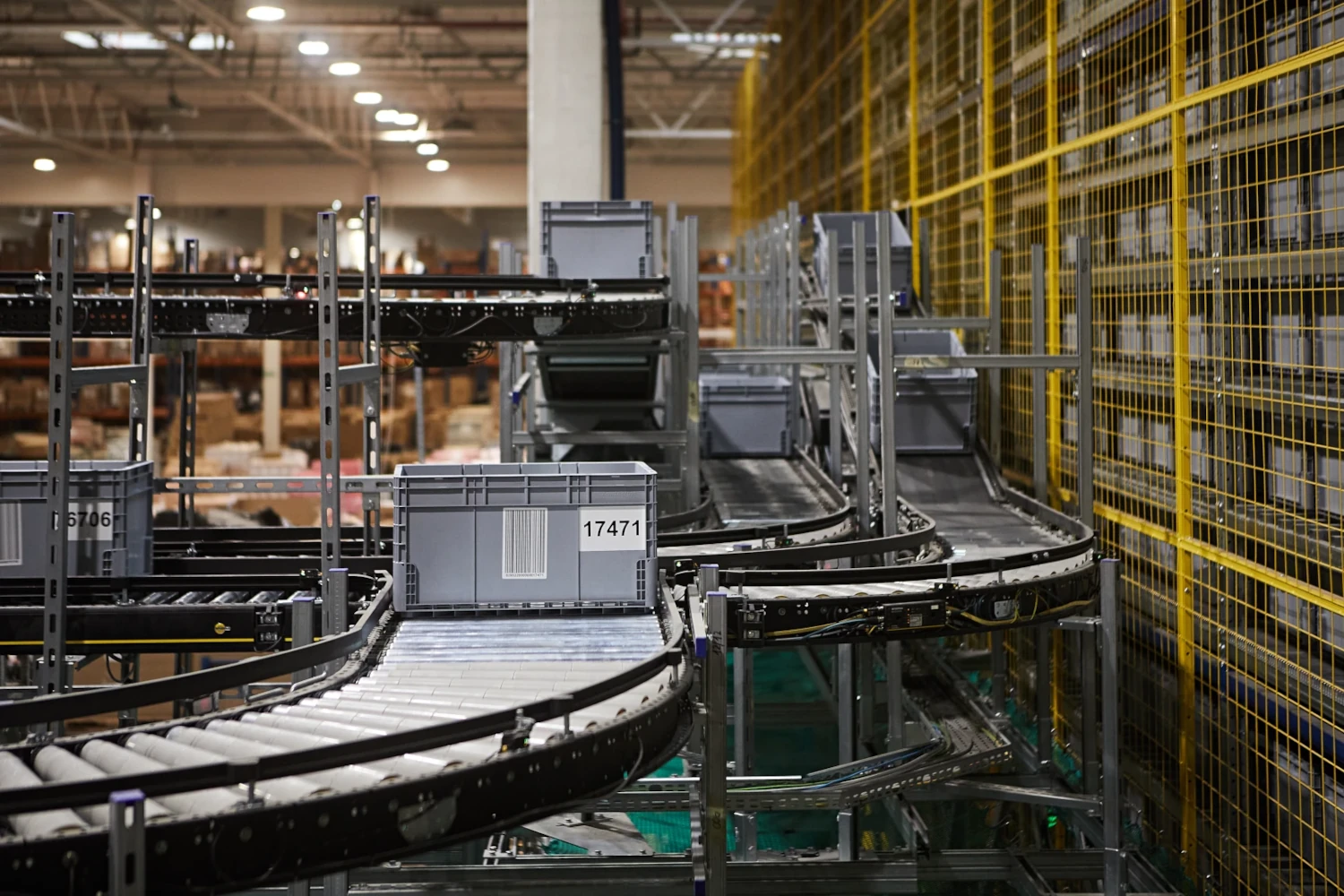
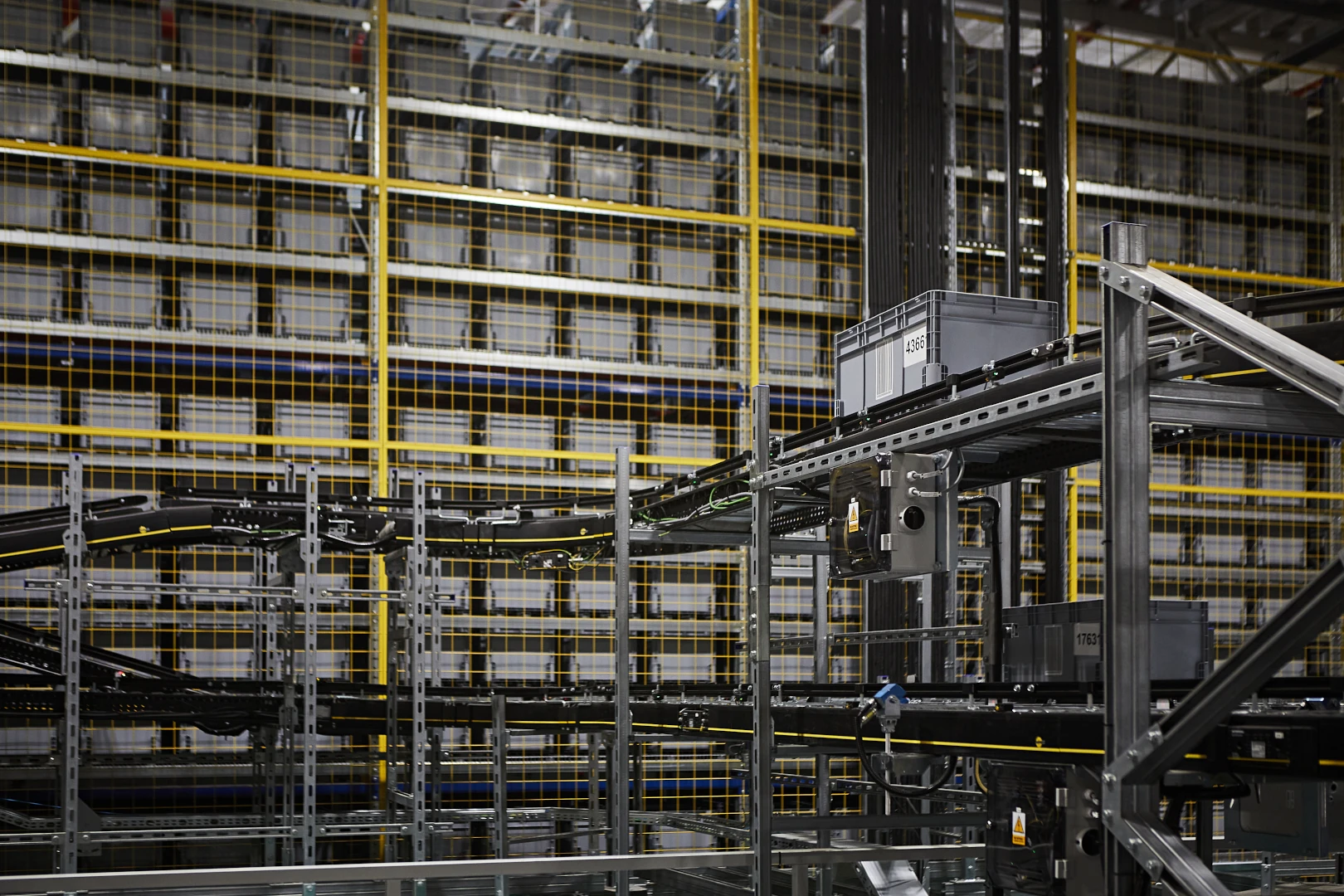
Conveyors are one of the most versatile elements of intralogistics. They transport finished products, semi-finished goods, containers, pallets, and non-standard items.
Key advantages include:
-
Continuous, uninterrupted operation,
-
High scalability,
-
Integration with any other warehouse technology,
-
Precise control of goods movement.
Whether you need basic conveyors or advanced systems, a major advantage is that conveyors can be expanded or upgraded in the future. This allows warehouse owners to grow the space without major infrastructure changes.
Custom solutions – when standard is not enough
Some situations require specialized solutions with precisely defined parameters. Examples include non-standard buffer stations, machine feed systems, or structures for handling unusual pallets and packages. Manufacturers can provide tailored solutions integrated into the entire infrastructure.
A warehouse should be a competitive advantage
It should be clear that a warehouse is not a secondary concern but a space storing goods that are key results of a company’s operations. It must be safe, compatible with intelligent solutions, functional, expandable, and scalable.
Pay attention to stackers, carts, lifts, conveyors, and custom solutions, which together create an ecosystem that allows companies to reduce logistics operation time, cut costs, and improve safety. A well-designed warehouse for finished products and semi-finished goods gives businesses a clear edge over the competition. Need intelligent solutions for your warehouse? Explore MPL Techma’s offerings!
FAQ – Storage of finished products and semi-finished goods
-
What is a warehouse and its definition?
A warehouse is a space for storing goods and raw materials, ensuring safe storage and easy access. It is a key element of the supply chain, where goods are received, transshipped, and issued. -
What are the main types of warehouses?
Warehouses can be closed, open, semi-open, or specialized for specific goods, such as bulk materials. Each type allows optimal storage according to requirements. -
What are the basic principles of storing goods?
Storage includes receiving, storing, picking, transshipping, and issuing goods, following FIFO, LIFO, or other principles. Efficient use of space, racks, and mechanization is essential. -
What is the role of racks in a warehouse?
Racks organize goods, provide easy access, and allow optimal load distribution. Proper placement improves warehouse and transport processes. -
How to ensure safe storage of goods?
Safe storage requires adapting conditions to the type of goods, including environmental and size considerations. Transport systems, stackers, and AGVs reduce the risk of damage and accidents. -
What does the storage process include?
The storage process covers receiving to issuing, including transshipment, picking, placement, and inventory management. Proper management improves material flow and storage quality. -
How does a warehouse impact production efficiency?
Well-organized warehouses streamline receiving, storage, picking, and shipping. Mechanization and automation, including conveyors and stackers, increase efficiency. -
What is picking in a warehouse?
Picking prepares loads for transport or delivery. Proper arrangement and transport systems ensure fast, error-free operations, even in specialized warehouses. -
How to store goods requiring special conditions?
Specialized goods must be stored in appropriate conditions using specialized equipment. Semi-open or closed warehouses adapt to specific product requirements. -
Why can a warehouse become a company’s competitive advantage?
A well-planned warehouse streamlines management, storage, and transport, minimizing costs. Optimal placement, mechanization, and intralogistics systems improve efficiency and safety.